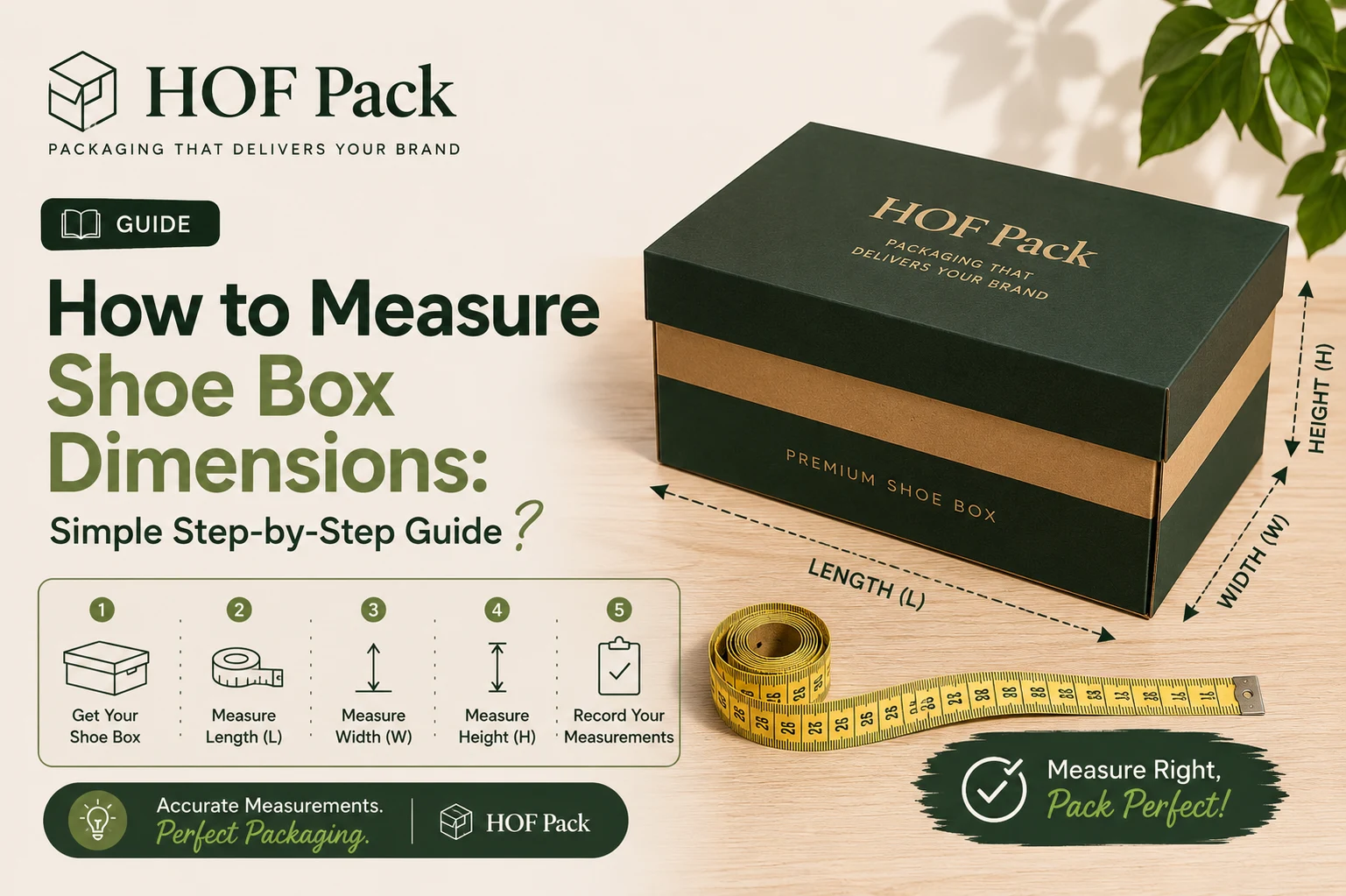
1. Introduction
Whether you’re shipping shoes, organizing inventory, or ordering custom packaging, knowing the correct shoe box dimensions can save you time and money.
Many people assume they can simply measure the outside of a shoe box and use those numbers. Unfortunately, that’s one of the most common mistakes. Measuring incorrectly can lead to damaged products, higher shipping costs, and custom boxes that don’t fit your shoes properly.
In this guide, we’ll explain how to measure a shoe box correctly, the difference between internal and external dimensions, standard shoe box sizes, and tips for choosing the right packaging.
The golden rule is simple:
Always measure shoe boxes using Length × Width × Height (L × W × H), and always use the internal dimensions whenever possible.
2. Why Accurate Shoe Box Dimensions Matter?
A few inches may not seem important, but they can have a big impact.
If your box is too small, shoes may become compressed or damaged during transit. If it’s too large, shoes can move around inside the package, increasing the risk of creasing and scuffing.
For businesses, inaccurate dimensions can also increase shipping costs because carriers often calculate charges based on package size, not just weight.
Whether you’re ordering custom shoe boxes or preparing products for shipping, accurate measurements help avoid unnecessary expenses.

3. What Tools Do You Need?
The good news is that measuring a shoe box is easy.
You’ll only need:
- A ruler or measuring tape
- A pen or pencil
- A piece of paper or your phone to record measurements
For the most accurate results, measure in both inches and centimeters if you regularly work with international suppliers.
4. How to Measure a Shoe Box: Step-by-Step
Before you begin, remove the lid and measure the inside of the box. It is important to measure the custom shoe box from inside because outside measurements include the thickness of the cardboard and the lid overlay.
Here is a step-by-step guide to measure the shoe box dimensions from the inside.
Step 1: Find the Length (The Longest Side)
- Look at the open box from the top.
- Measure the longest side from the inside wall on the left to the inside wall on the right.
Step 2: Find the Width (The Shorter Side)
- Turn the box or your ruler 90 degrees.
- Measure the shorter side across the bottom, going from front to back.
Step 3: Find the Depth or Height (How Tall It Is)
- Measure from the inside bottom of the box straight up to the top rim.
- Do not include the lid in this measurement!
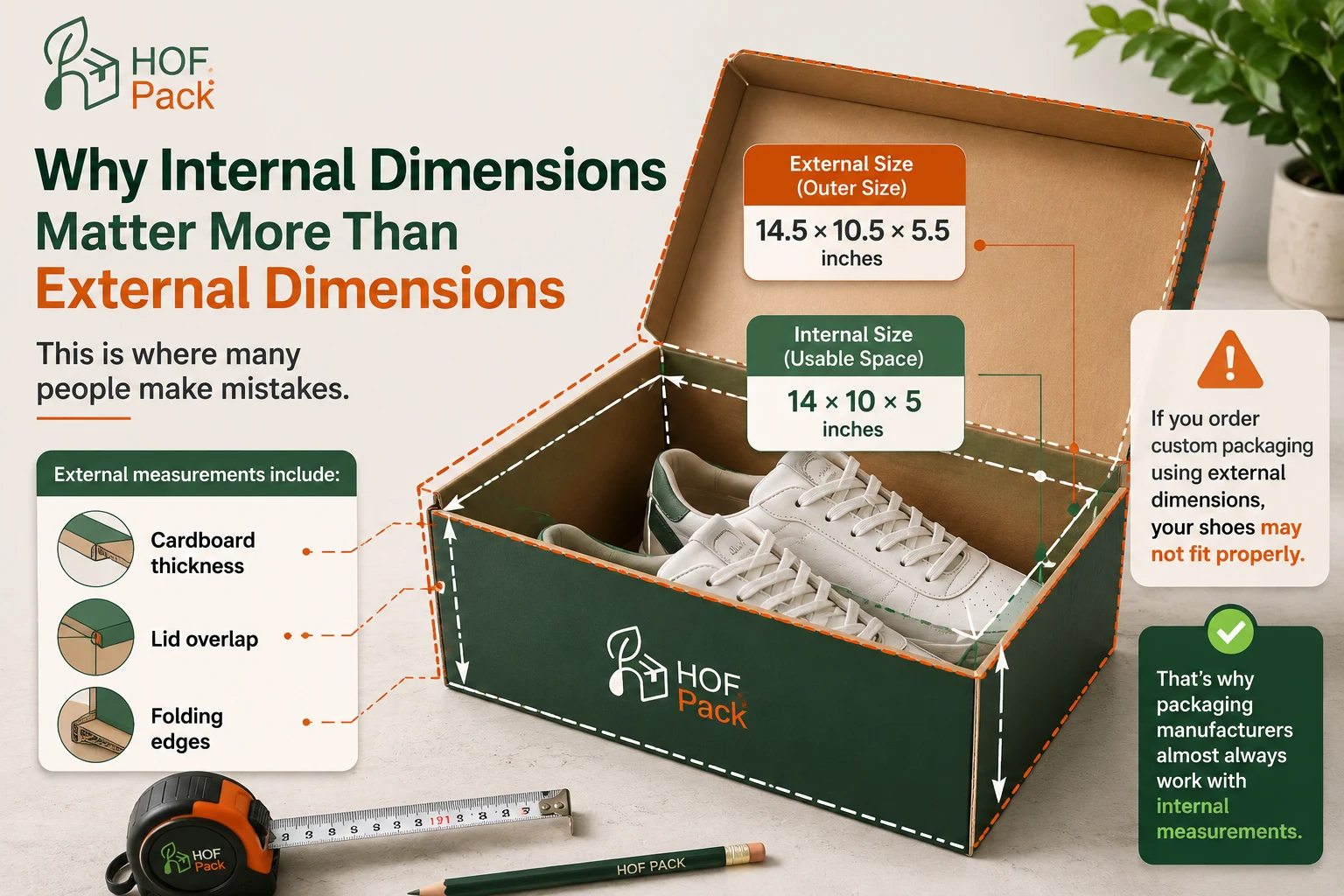
5. Why Internal Dimensions Matter More Than External Dimensions?
This is where many people make mistakes.
External measurements include:
- Cardboard thickness
- Lid overlap
- Folding edges
Internal dimensions represent the actual usable space inside the box.
For example, a shoe box may measure:
External Size:
14.5 × 10.5 × 5.5 inches
Internal Size:
14 × 10 × 5 inches
If you order custom packaging using external dimensions, your shoes may not fit properly.
That’s why packaging manufacturers almost always work with internal measurements.
6. Standard Shoe Box Sizes
Shoebox dimensions vary depending on the type of footwear. Here’s a quick reference guide:
|
Footwear Type |
Length |
Width |
Height |
|
Men’s Sneakers & Dress Shoes |
14 in (35.5 cm) |
10 in (25.4 cm) |
5 in (12.7 cm) |
|
Women’s Shoes & Sneakers |
12 in (30.5 cm) |
7 in (17.8 cm) |
4 in (10.2 cm) |
|
High Heels & Wedges |
12 in (30.5 cm) |
7.5 in (19 cm) |
6 in (15.2 cm) |
|
Ankle Boots & Winter Boots |
14 in (35.5 cm) |
12 in (30.5 cm) |
6 in (15.2 cm) |
|
Children’s Shoes |
9 in (22.8 cm) |
6 in (15.2 cm) |
3 in (7.6 cm) |
Keep in mind that brands may use slightly different dimensions depending on the shoe style. For example, Nike shoe box sizes and Adidas shoe box dimensions can vary across product lines.
7. How Much Extra Space Should You Leave?
A common mistake is ordering a box that matches the shoe size exactly. Shoes need a little breathing room as well.
At HOF Pack, we recommend adding approximately 0.5 inch (1 cm) of extra space. This extra room allows space for:
- Tissue paper
- Product inserts
- Protective wrapping
- Easier product placement
- Improves the customer unboxing experience.
8. Shoe Box Dimensions for Shipping
When shipping shoes, packaging size directly affects shipping costs. You will probably hear most carriers say something called Dimensional Weight (DIM Weight). This means they calculate shipping charges using package volume, not just package weight.
A box that’s unnecessarily large may cost more to ship even if it’s lightweight. For this reason, it’s important to choose a box that’s large enough to protect the shoes but not so large that you’re paying to ship empty space.
9. Avoid These Common Measurement Mistakes In Case of Shoe Boxes:
Here are a few mistakes people frequently make that you should definitely avoid. Make a checklist, take a screenshot, or bookmark this blog to avoid these common mistakes every time you are measuring the dimensions of your shoe box. For instance:
- Measuring the outside instead of the inside
- Including the lid in height measurements
- Recording dimensions in the wrong order
- Forgetting to allow space for inserts and tissue paper
- Using estimated measurements instead of exact numbers
10. Final Thoughts
Measuring shoe box dimensions is simple once you know the correct method.
Remember:
- Measure the inside of the box
- Follow Length × Width × Height order
- Leave about 0.5 inch of extra space
- Consider shipping costs when selecting box sizes
Whether you’re storing shoes, shipping products, or ordering custom packaging, accurate measurements help prevent costly mistakes and ensure a better customer experience.
If you’re looking for custom shoe boxes designed around your exact dimensions, contact the HOF Pack team for a free consultation, custom dieline, or structural packaging recommendation. HOF Pack is a US-based packaging company that specializes in custom packaging boxes and custom bags to elevate a brand’s image.
HOF Pack Team
Custom Packaging Experts at HOF Pack