Insights & Guides

The HOF Pack
Blog

Packaging tips, brand strategy, and industry trends — straight from our team of custom packaging experts.

Seasonal Packaging Ideas for 2026 (With a Month-by-Month Planning Calendar)
Packaging
Featured Article

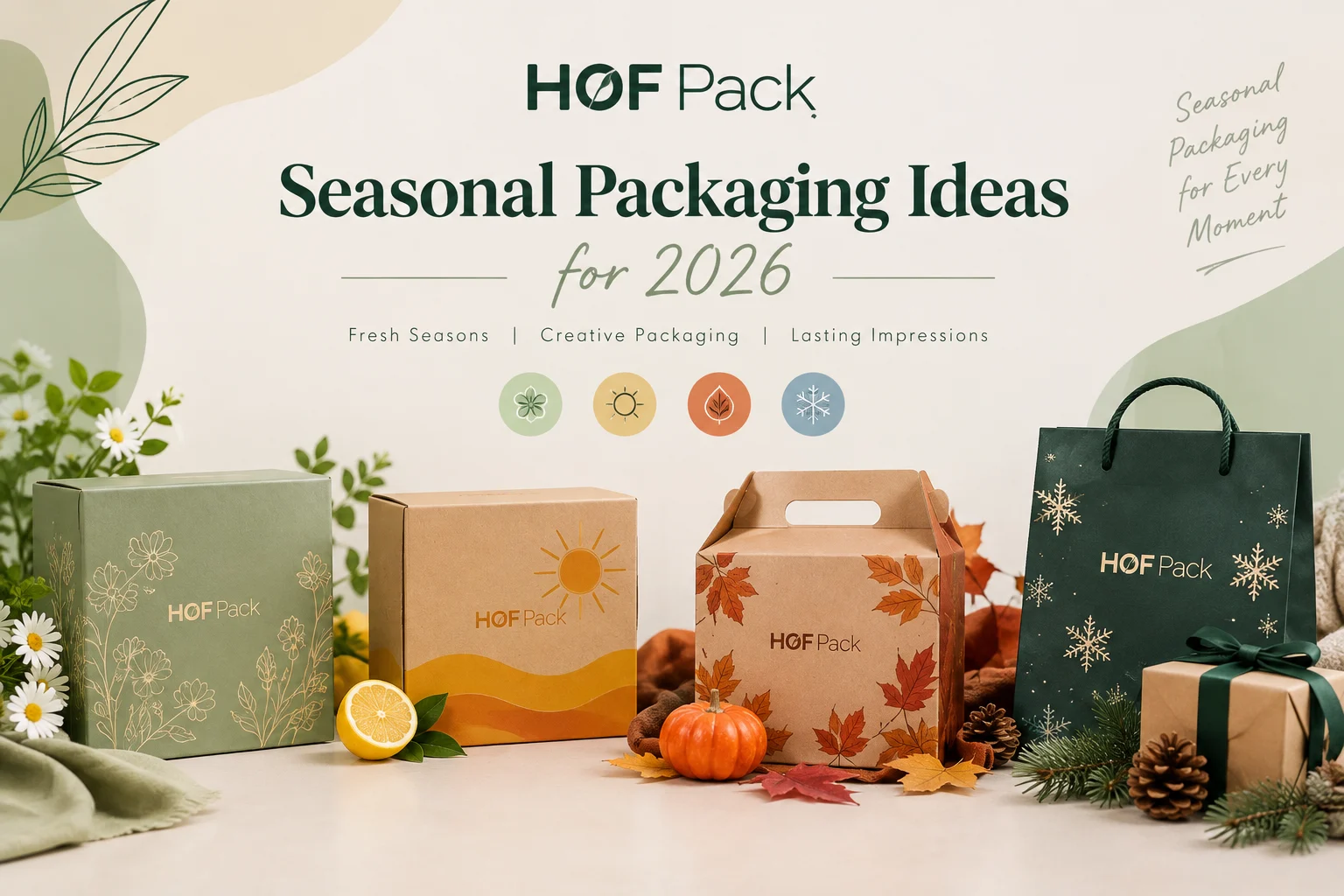
Seasonal Packaging Ideas for 2026 (With a Month-by-Month Planning Calendar)

Oct 8, 202619 min read
Read Article
More Articles
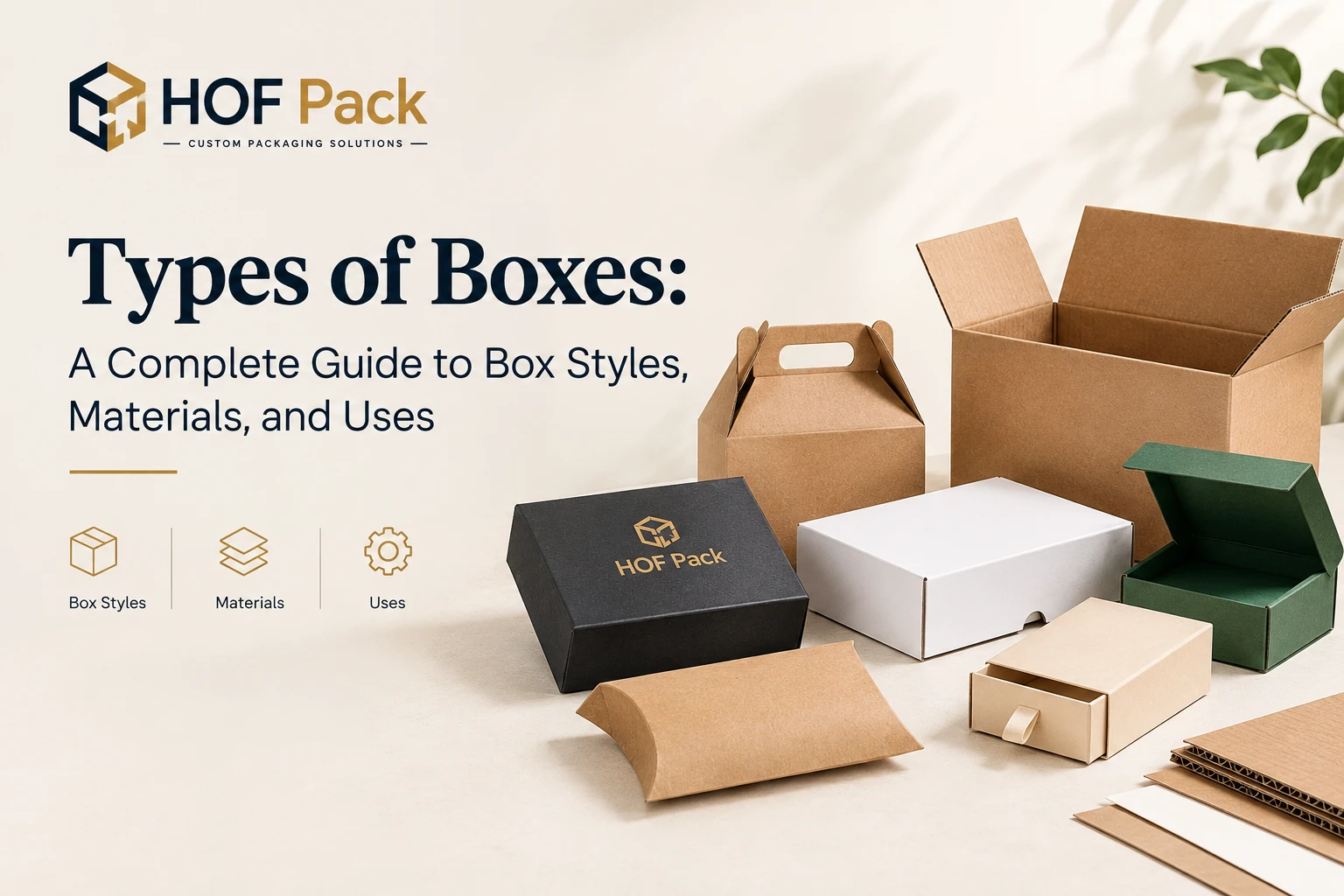
Types of Boxes: A Complete Guide to Box Styles, Materials, and Uses
Packaging

Types of Boxes: A Complete Guide to Box Styles, Materials, and Uses

Explore different types of boxes, including popular styles, materials, and uses. Learn how to choose the right box for your products, packaging needs, and brand.

Sep 17, 202624 min
Packaging Companies in USA: Who Does What in 2026
Packaging

Packaging Companies in USA: Who Does What in 2026

Finding reliable packaging companies in USA markets has become a moving target. Mega-mergers like Smurfit Kappa joining WestRock, International Paper acquiring DS Smith, and Amcor acquiring Berry Global. These mergers are rapidly reshaping who will actually handle your production.   For brand founders moving 5,000 units and supply chain leads running 2 million, the challenge isn't just pulling up a list of suppliers. It's navigating rigid minimum order quantities, endless lead times, and tier-one giants that won't even return a small brand's email. Here is the breakdown categorizing leading packaging companies in USA manufacturing by the exact volume tiers they serve. It can save you weeks of dead-end quotes, so you can skip the gatekeeping and partner with a manufacturer built for your operational scale. Who are the largest packaging companies in the US? The largest packaging companies in the US are Smurfit Westrock, Amcor and International Paper. Behind them sit Packaging Corporation of America, Graphic Packaging, Sonoco, Sealed Air, Ball and Crown Holdings. All three leaders reached their present scale through mergers completed inside a ten-month window. Company Core output Reported scale Smurfit Westrock Containerboard, corrugated, folding cartons $$31.18B revenue (FY2025); 500+ converting plants Amcor Flexible film, rigid plastic containers $23.5B net sales (FY2026) International Paper Containerboard, corrugated boxes $23.63B net sales (FY2025) Packaging Corporation of America Containerboard, corrugated shippers Major US containerboard producer Graphic Packaging Folding cartons, paper cups, foodservice Consumer packaging Sonoco Rigid paper containers, industrial packaging Diversified Sealed Air Protective packaging, food films Void fill and barrier films Ball / Crown Holdings Aluminum and steel cans, closures Metal container leaders What changed in the US packaging industry in 2025 and 2026? Consolidation, and now a reversal. Smurfit Kappa and WestRock combined on July 5, 2024 into the world's largest listed packaging company by revenue. International Paper closed its acquisition of DS Smith in early 2025. Amcor and Berry Global completed their all-stock merger on April 30, 2025. Then the direction changed. Alongside its full-year 2025 results, International Paper announced it will separate into two independent public companies — Packaging Solutions North America and Packaging Solutions EMEA — a split expected to complete within 12 to 15 months. For buyers, the middle of the market thinned out. Regional converters that once quoted 5,000-unit runs were absorbed into groups with much higher minimums, and top-tier quote cycles now run longer than in 2023. Best Paper and Packaging Companies for small businesses 2026 The best paper and packaging companies for small businesses 2026 are usually not the largest ones. A Fortune 500 converter is built around million-unit runs and annual contracts. A brand ordering hundreds or low thousands of units is better served by mid-size custom converters and trade printers whose economics start at 100 to 1,000 units. Five things separate a supplier that fits a small brand from one that does not: A published minimum order quantity. "Contact us for MOQ" usually means the answer is high. A physical sample before the full run. Screen proofs hide color drift and board feel. Dielines supplied to you , rather than demanded from you. Turnaround quoted in days , with the clock starting at artwork approval. A named contact who stays on the job from quote to delivery. HOF Pack works in this tier, with a 100-unit minimum and an 8-12 day US turnaround, and so do plenty of other custom converters. Ask three for the same sample on the same spec. What packaging options are available in the USA? US converters cover six broad formats, and most suppliers specialize in one or two rather than carrying all of them. Asking a folding-carton plant for flexible pouches usually means the job breaks out. The packaging options USA buyers can source domestically break down as follows: Folding cartons   The most popular materials for folding cartons in the USA are SBS, kraft and chipboard retail boxes, printed and shipped flat. Corrugated   These boxes are excellent choices for shippers, e-commerce mailers, and retail-ready displays. Flexible Flexible packaging like mylar pouches , stand-up bags, roll stock and films are making its way to the industry with relatively higher demand.  Rigid setup boxes The ideal material for these boxes is wrapped chipboard for premium and gift tiers. It is ideal for internal product support rather than long distance shipping.  Labels, sleeves and tags The best material for these sleeves and tags is pressure-sensitive, shrink and paper. Major US Packaging Trends Reshaping Buyers' Choices in 2026 Knowing which packaging style you need is only half the battle. Regulations, brand specs, and tracking technologies are rapidly reshaping how materials move across the US supply chain. Three major trends are directly impacting specs, production costs, and shelf compliance for those sourcing packaging this year. Here are : Strict Sustainability Compliance  Eco-friendly packaging is no longer just a feel-good marketing angle. Instead, it is a regulatory requirement. Extended Producer Responsibility (EPR) laws and state-level mandates are forcing brands to swap out non-recyclable materials for certified sustainable stocks to avoid fines and retail rejections. Smarter Mono-Material Design Multi-layer plastics and mixed-material boxes are rapidly falling out of favor. Converters are heavily pivoting toward mono-material builds. It is like single-polymer flexible pouches or 100% paperboard setups, because they eliminate complex sorting and easily fit into standard municipal recycling streams. Mainstream Smart Packaging Technologies that used to be experimental pilots are now standard on retail shelves. Brands are increasingly embedding high-density QR codes, smart labels, and digital tracking directly into their press runs to handle batch authentication, track chain-of-custody, and engage consumers right from the box. What is the difference between a packaging manufacturer and a packaging solutions company? Product packaging manufacturers own the plant. They print, die-cut, laminate and convert in house, so they control quality directly and price better at volume. Packaging companies in USA design and broker, then place the job with a converter. They offer a wider format range and more design support, but add a margin layer and less direct control over the press. Premium packaging companies form a third bracket. They specialize in rigid boxes, foil, embossing and specialty finishes for packaging brands where shelf presence matters more than unit cost. These boxes are ideal to market cosmetics, spirits, and luxury retail. Neither model is better. High volume on one carton favors a manufacturer; eight SKUs across four formats favors a solutions partner. How should you choose a US packaging supplier? Compare suppliers on answers, not marketing. Ask every shortlisted converter the same five questions in writing, then put the replies side by side. Vague answers on minimums and lead times reliably predict the problems you will have later: What is your minimum order quantity for this exact structure? What is your turnaround, measured from artwork approval rather than order date? Will you send a physical sample on my stock before the full run? Do you print in house, or place the job elsewhere? Who is my contact, and what happens if the run comes back wrong? The supplier who answers all five plainly is the one worth quoting. Take Away Choosing the right partner across packaging companies in USA supply chains comes down to finding a supplier matched to your order volume. While mega-mergers dominate high-volume manufacturing, small businesses and growing packaging brands get better terms, speed, and lower MOQs from mid-size custom converters. You need to evaluate product packaging manufacturers and packaging solutions companies if your product line calls for folding cartons or flexible pouches, on transparent lead times, physical samples, and clear order minimums. Skipping the industry gatekeeping and matching your order volume to the right tier is the fastest way to secure reliable, retail-ready Skip the Gatekeeping & Get Custom USA Packaging for Your Next Order Mega-mergers and massive minimums shouldn't slow down your brand's growth. While giant conglomerates leave growing businesses waiting weeks for basic quotes, HOF Pack delivers the speed, flexibility, and direct service your product lines need. Low 100-Unit MOQ:   Launch new SKUs, test seasonal runs, or scale up without tying up cash flow. Fast 8–12 Day US Delivery:   Get retail-ready custom boxes and pre-roll packaging on your schedule. Free US Shipping:   Transparent wholesale rates with zero hidden freight fees. Hands-On Support:   Free dielines, physical stock samples, and dedicated account managers from press to porch. Ready to bypass high MOQs and long lead times? Start Your 100-Unit Custom Run Today → (Or claim your instant wholesale quote in under 2 minutes)

Aug 30, 20269 min
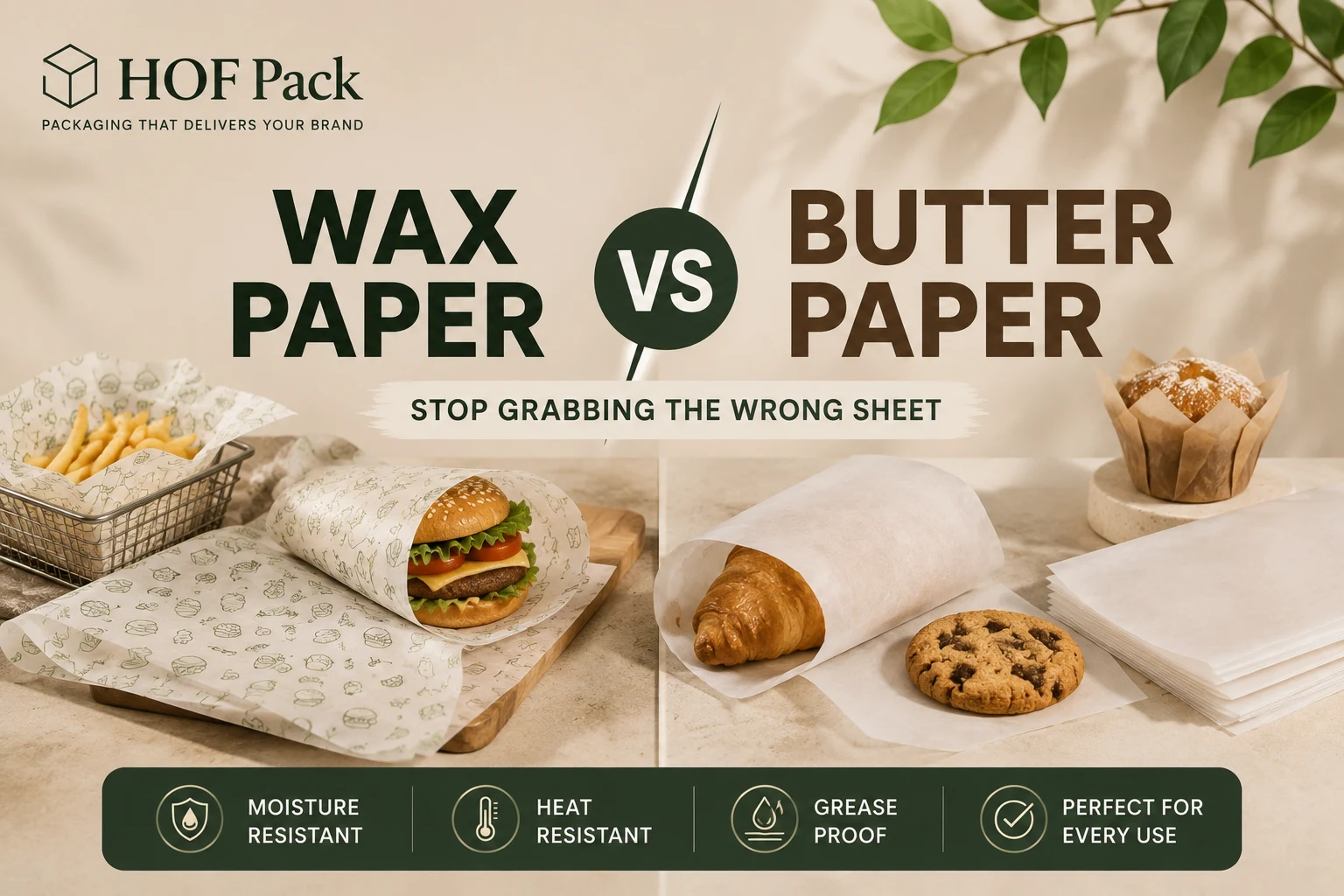
Wax Paper vs Butter Paper: Stop Grabbing the Wrong Sheet
Industry News

Wax Paper vs Butter Paper: Stop Grabbing the Wrong Sheet

Wax paper is everywhere. It holds around 40% penetration in food service, lining deli counters, wrapping sandwiches, and separating patties in kitchens across the country, and North America alone accounts for roughly 40% of the global wax paper market. Odds are you've handled a sheet this week without a second thought.   And that's exactly where the trouble starts. Picture your cake batter-ready, the oven hot, and you grab a sheet off the roll on autopilot. Twenty minutes later your kitchen smells like melting crayons, smoke is curling from the oven door, and a film of wax has fused to the bottom of your bake. One wrong sheet, one ruined recipe. Here's the uncomfortable truth: wax paper and butter paper look almost identical side by side, yet they behave in completely opposite ways the moment heat enters the picture. The wax paper vs butter paper mix-up quietly trips up home cooks, bakers, and food businesses every single day, and most people never realize they've been using the wrong one. What Is a Butter Paper? Let's start with the basics. Many people do not know what a butter paper is. Well, it's a greaseproof, semi-translucent sheet made from processed cellulose fibers. This paper is used to wrap butter, cheese, and other fatty foods without soaking through or leaving oily stains. Over time, its name stuck to a whole category of kitchen paper. Today, many cooks use "butter paper" as an everyday term for baking paper or parchment paper. Unlike wax paper, it isn't coated in a meltable wax layer, so it resists grease and moisture, releases baked goods cleanly, and tolerates oven heat far better. Premium versions carry a food-safe silicone coating for extra non-stick performance. That heat resistance is exactly what makes the wax paper vs butter paper distinction matter in a real kitchen. Is Wax Paper and Butter Paper Same? People constantly ask, is wax paper and butter paper the same? The answer is no. They differ in almost every way that matters once you look past the roll: Coating: Wax paper has a thin paraffin or soy wax layer on both sides. Butter paper is greaseproof with no meltable wax, often finished with a heat-stable silicone coating instead. Heat tolerance: Wax paper melts, smokes, and can even catch fire near an oven element. Butter paper holds up to typical baking temperatures, usually up to around 420–450°F. Best use: Wax paper is built for cold jobs, wrapping sandwiches, separating patties, lining counters. Butter paper is made for the oven, lining trays, and baking. Food contact: Wax paper can transfer wax onto hot food. Butter paper releases food cleanly without residue. Feel and look: Wax paper has a slight waxy sheen and slick surface. Butter paper is more matte, crisp, and semi-translucent. Durability: Butter paper tends to be sturdier under heat and moisture, while wax paper can tear or soften faster on greasy, warm foods. When it comes to wax paper vs butter paper, the real dividing line is simple: does it go anywhere near heat? Cold storage, reach for wax paper. Anything baked, reach for butter paper. Parchment Paper Is Butter Paper... Sort Of Many people think that parchment and butter paper are the same. Many US kitchens, South Asian and British cooking professionals believe that parchment paper is just another name of butter paper. Both papers are greaseproof and oven-friendly. Therefore, the two terms get used interchangeably. The subtle difference between butter paper and parchment paper comes down to the coating. True parchment is silicone-coated for maximum non-stick performance and higher heat tolerance, usually rated to around 420–450°F.  Some sheets sold as butter paper are greaseproof but not silicone-coated, making them slightly less slick and rated for lower temperatures. For everyday wrapping and tray lining, they are effectively interchangeable. For high-heat baking, silicone-coated parchment has the edge. Either way, both sit on the same side of the wax paper vs butter paper divide: bake-ready. Are Parchment Paper and Wax Paper the Same? This is the question that saves ruined bakes. Are parchment paper and wax paper the same? Absolutely not. Parchment is heat-safe and belongs in the oven; wax paper is not and does not. Swap them and the wax melts, smokes, and in some cases can catch fire against a hot element or flame. So if parchment sits with butter paper on the bake-safe side, wax paper stays firmly in the cold-storage lane. That single fact resolves most of the confusion behind the wax paper vs butter paper debate: one is built for heat, the other only for cold. Quick Guide: When to Use Each Use wax paper for: Wrapping cold sandwiches, cheese, and grab-and-go items Separating burger patties, cookie dough, or candy layers Lining countertops for mess-free food prep Brief microwave covering (never the oven) Use butter paper or parchment for: Lining baking sheets and cake pans Rolling out sticky dough Wrapping greasy or oily foods En papillote cooking and any oven task up to its rated temperature Keep the two rolls in different spots in your kitchen and the wax paper vs butter paper mistake disappears overnight. Why This Matters for Food Brands and Packaging For cafés, bakeries, delis, and food brands, choosing the wrong paper is not just a kitchen slip. It affects food safety, presentation, and cost. Greaseproof butter paper and parchment keep branded wraps looking clean and professional, even under warm, oily foods. Wax paper is perfect for cold, quick-service items where a light, moisture-resistant wrap is all you need. Getting the wax paper vs butter paper choice right means your packaging matches your menu, your heat, and the experience your customer has when they unwrap their order. The wrong sheet shows up as grease stains, torn wraps, or a soggy first impression, and customers notice. Stay tuned for more with HoF Blogs . 

Aug 21, 20266 min
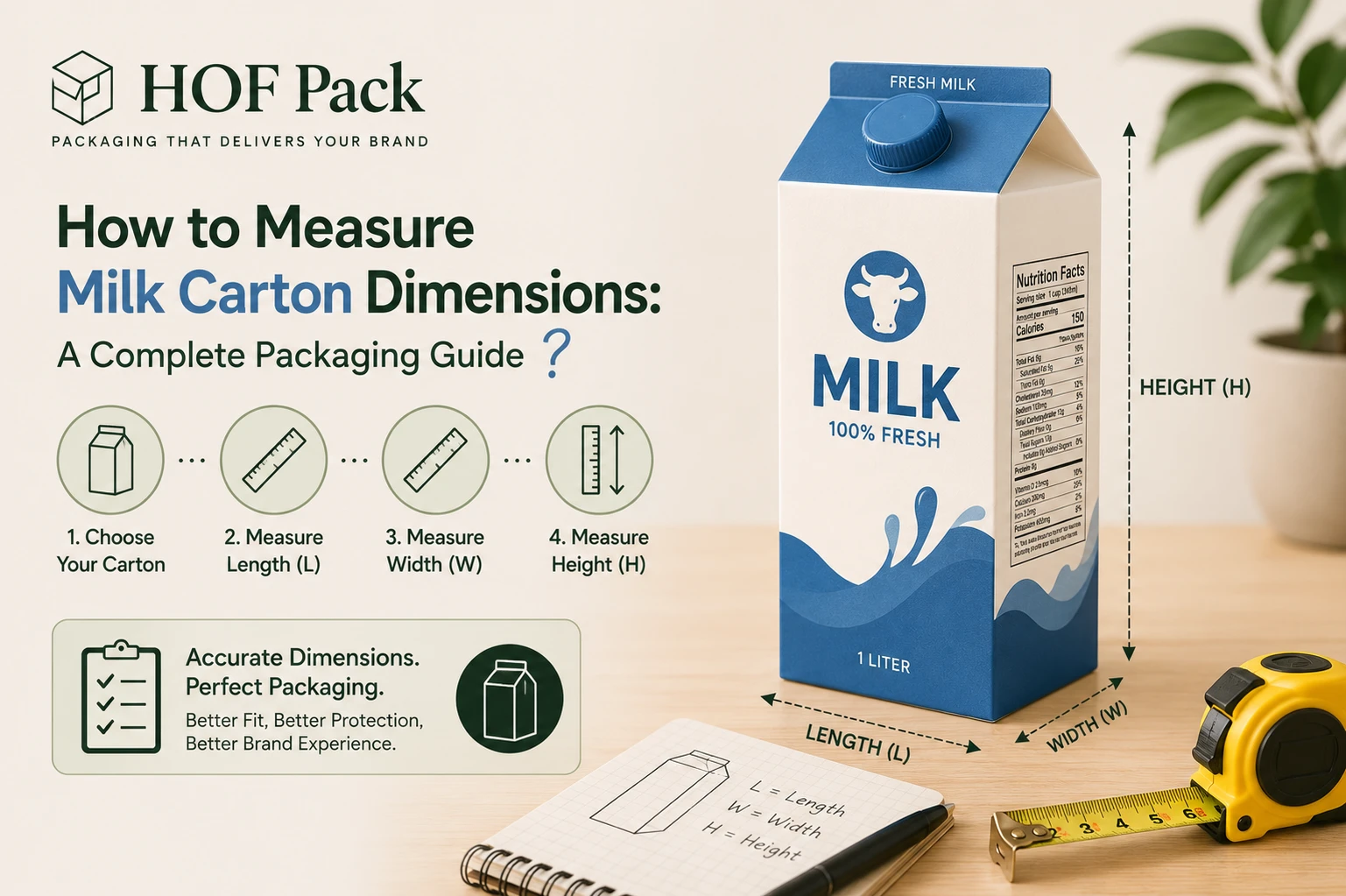
How to Measure Milk Carton Dimensions: A Complete Packaging Guide
Packaging

How to Measure Milk Carton Dimensions: A Complete Packaging Guide

1. Introduction Milk carton packaging changed the dairy industry in the early 1900s. Before cartons existed, fresh milk used to spoil quickly and could not easily be sold in retail stores. Today, customized, high-quality milk cartons exist to protect milk from bacteria, heat, and humidity, keeping it fresh from the farm to the store shelf. Whether you are running an established dairy farm or launching a brand-new plant-based milk line, getting your packaging dimensions right is critical. If your boxes are just a fraction of an inch off from the right size, they will not fit correctly on grocery store shelves, they will cause shipping issues, and they could even lead to costly product leaks.  In this guide, we will break down exactly how to measure your milk cartons, explore standard industry sizing charts, and help you select the best materials to keep your products fresh as new. 2. Why Choosing the Right Milk Carton Dimensions Matters? Modern milk cartons are not just milk containers. Branding plays a huge role in packaging these days. They serve as a vital marketing tool and act as a shield for your product. Getting the exact dimensions right helps your business in three major ways: Flawless Shipping and Stacking: Milk cartons feature a space-saving rectangular design. When your dimensions are precise, you can stack the boxes tightly inside crates without leaving empty gaps or crushing the containers. Perfect Retail Shelf Fits: Commercial grocery store shelves and refrigerator doors have strict height limits. Correct measurements ensure your product slides smoothly into place. Vending Machine Compatibility: Smaller sizes, like the school half-pint, must be exact to prevent jamming in standard vending machine drop slots. 3. Understanding the Materials Inside and Out A milk carton cannot rely on plain paper alone. Because it holds liquid, it requires specialized, food-safe layers. The Outer Layer Options Paperboard: The most common choice. It is lightweight, cost-effective, and provides a smooth, flat surface for bright custom printing. Cardboard: A thicker, sturdier option used for larger capacities. It provides extra protection against bumps and drops during transit. The Inner Shield If you look inside a torn carton, you will see a shiny or smooth lining. Manufacturers use a thin layer of Polyethylene (LDPE) plastic or a micro-layer of Aluminum foil. This inner barrier is completely food-safe and prevents the milk from soaking through the paperboard, ensuring zero leaks. 4. Standard Milk Carton Sizing Guide  Milk carton capacities are traditionally measured in fluid ounces (oz) within the US market. The table below lists the standard industry dimensions in both inches and centimeters. Milk cartons are manufactured in several standard sizes to accommodate different beverage volumes. The Half-Pint (School Size) carton typically holds 8 oz (236 ml) and is commonly available in dimensions of 2.25" × 2.25" × 2.75" (5.7 × 5.7 × 7 cm) or 2.8" × 2.8" × 4" (7.1 × 7.1 × 10 cm). The Pint carton has a capacity of 16 oz (473 ml) and usually measures 2.75" × 2.75" × 4" (7 × 7 × 10.2 cm) or 3" × 3" × 4.5" (7.6 × 7.6 × 11.4 cm). For larger beverage packaging, the Quart carton holds 32 oz (946 ml) and is generally produced in dimensions of 2.75" × 2.75" × 7.5" (7 × 7 × 19 cm) or 3.6" × 3.6" × 8.3" (9.1 × 9.1 × 21 cm). The Half-Gallon carton is designed for 64 oz (1.89 liters) and commonly comes in sizes of 5.06" × 4" × 5.12" (12.8 × 10 × 13 cm) or 6" × 4" × 8" (15.2 × 10 × 20.3 cm). The largest standard option is the Gallon carton, which holds 128 oz (3.78 liters). Standard gallon milk carton dimensions are typically 7" × 4" × 7.5" (17.8 × 10 × 19 cm) or 7.5" × 4.5" × 8" (19 × 11.4 × 20 cm). These industry-standard dimensions may vary slightly depending on the manufacturer, carton design, and packaging requirements, but they serve as reliable reference measurements for most dairy and beverage packaging applications. 5. Step-by-Step: How to Measure Your Milk Carton To find the exact measurements of a carton, place the empty box flat on a table. Grab a hard ruler or a standard measuring tape. Always measure the outer dimensions from edge to edge. Step 1: Measure the Length (L) Look at the front face of the carton. Measure the flat horizontal distance from the left corner to the right corner. Do not include any loose side flaps or overhanging tabs. Step 2: Measure the Width (W) Turn the carton to its side panel. Measure the horizontal distance from the front edge to the back edge. This tells you how deep the box is. Step 3: Measure the Height (H) Measure vertically from the absolute bottom base of the carton straight up to the top. The height may differ from style to style.  Below is a guide to measure the liquid volume for different styles of boxes: 6. How to Calculate the Liquid Volume Different carton shapes use different formulas to find how much liquid they can hold. For Square and Rectangular Cartons Most standard cartons use a flat rectangular or square base. To find the internal volume, use this simple formula: Volume = Length x Width x Height (to the roofline) V = L x W x H For Cylindrical Cartons If your brand uses round, tube-style paperboard containers, you will need to find the radius (half of the total width across the circular top) and use the cylinder formula: Volume = pi x r^2 x Height (πr2h) For Gable Tops If your carton has a roof-like sloping "gable top," measure the height up to the point where the roof begins for liquid volume calculations. For total shelf-clearance measurements, measure all the way to the very peak of the top seal, including any screw caps. 7. Common Measurement Mistakes to Avoid Last but definitely not least, brand owners usually make some common mistakes while measuring the cardboard milk carton dimensions. As a packaging expert, we must forbid you from making some common measurement mistakes.  Ignoring Wall Thickness:  If you only measure the absolute outside of a thick cardboard container, your internal liquid capacity might end up smaller than expected. Always talk to your manufacturer about wall thickness. Forgetting the Pour Spout:  If your carton uses a plastic twist-off screw cap or a pull tab, ensure you add that extra height to your calculations so it fits inside shipping crates comfortably. Rounding Off Metric Conversions Early:  If you are converting inches to centimeters, don't round your numbers too early. Multiply the exact inch value by $2.54$ to avoid slight sizing errors. 8. Get Perfect Custom Dimensions with HOF Pack You do not have to figure out complex packaging math alone. At HOF Pack, we help dairy and beverage brands design the exact carton sizes they need to stand out on retail shelves. We provide completely free design assistance, digital flat templates, and realistic 3D mockups before you spend a dime on production. With low minimum order quantities (starting at just 500 units), factory-direct wholesale pricing, and lightning-fast 8–10 day turnarounds, we make getting the perfect box simple. Ready to build your custom carton? Contact our friendly packaging experts today at info@hofpack.com or call us at +1 (888) 429-4881 for a completely free consultation!

Aug 21, 20268 min
Jewelry Packaging Ideas To Elevate Your Brand
Packaging

Jewelry Packaging Ideas To Elevate Your Brand

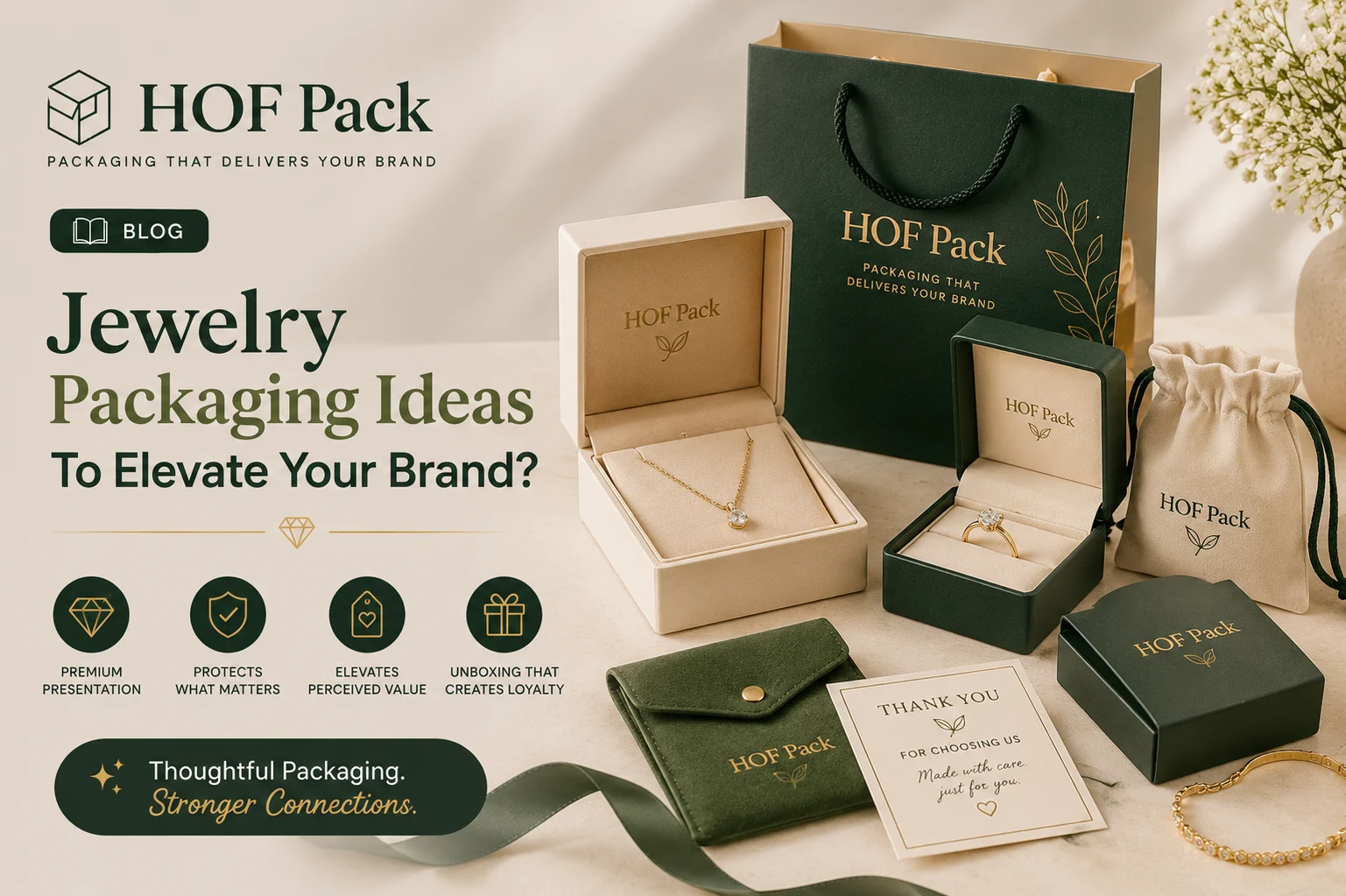
1. Introduction Being a jewelry brand owner in the United States, you must be overwhelmed with the diversity of packaging designs: custom boxes, their types, font ideas, branding ideas, custom bags, and whatnot.  Choosing the right packaging idea for your jewelry brand is important because even the small details make a significant difference. Creative jewelry packaging ideas can make a small business look chic and transform it into a luxury brand icon.  In this guide, we will show you the top 15 jewelry packaging ideas that can make any jewelry brand look expensive. Based on your brand preferences, you can select the style most suitable to your brand.  2. Why is Customized Jewelry Packaging Important? It is the first impression your customer actually touches. When someone buys jewelry, they aren’t just buying a necklace or a ring; they are buying a feeling of excitement, reward, or romance. If a beautiful, high-end piece of jewelry arrives in a cheap, generic plastic baggie, the excitement instantly dies. Customized jewelry packaging is crucial for three major reasons: It Tells Your Brand Story Instantly:  Custom boxes use your exact brand colors, logo, and personality. The second a customer pulls the package out of their shipping mailer, they know they are about to open something special. It Prevents Tangles, Scratches, and Damage:  Jewelry is incredibly delicate. Fine chains tangle into knots, soft metals like sterling silver scratch easily, and gemstones can chip. Custom boxes are engineered with perfect internal inserts, like velvet pads, elastic bands, or custom slots, to keep your pieces completely locked down and safe during shipping transit. It Makes Your Brand Shared on Social Media:  We live in an "unboxing" culture. Customers love recording videos of themselves sliding open a beautiful drawer-style box or lifting the lid on a rigid jewelry case. Beautiful custom packaging turns an ordinary purchase into a viral social media post for your business. 3. How Does High-Quality Jewelry Packaging Transform Small Brands Into Luxury Icons? Cute jewelry packaging ideas are the ultimate secret weapon to charging premium prices (don’t let your customers read that).  The biggest difference between a budget boutique shop and a high-end luxury icon isn’t always the metal (sounds fishy, right? But it is actually not). The key is almost always the presentation. High-quality packaging changes how people perceive the entire value of your product.  Here is how upgrading your boxes transforms your small business into a luxury brand: It Creates "Perceived Value":  Think about buying a simple silver ring. If it is dropped into a basic paper pouch, it feels like a $20 item. Take that exact same ring, place it inside a heavy, rigid box with a velvet interior, a soft-touch matte finish, and a metallic gold foil logo, and it instantly feels like a $150 luxury piece. It Builds Long-Term Trust:  Luxury brands look professional at every single touchpoint. When a small business invests in high-quality paperboard, solid magnetic closures, and clean typography, it signals to the buyer that your business is legitimate, reliable, and deeply cares about quality. It Turns Your Boxes into Keepsakes:  Cheap packaging gets thrown in the trash immediately. Premium jewelry packaging is kept forever. Customers will leave your beautiful custom boxes sitting out on their vanity tables or dressers to store their jewelry long-term. Every single time they look down, your logo is right there, keeping your brand top-of-mind for their next purchase. 4. Top Jewelry Packaging Ideas Every Brand Should Know As a reliable packaging manufacturer in the United States, we have broken down the best jewelry packaging ideas for you. Whether you want aesthetic packaging ideas for jewelry business, jewelry packaging for small business, or handmade diy jewelry packaging ideas, here are some inspirations for you.  Eco-Conscious & Sustainable Packaging Trends Sustainability takes center stage as consumers prioritize ethical brands, especially in recent years. Even consumers in the United States prefer sustainable brands and eco-friendly practices. It not only looks good, but also increases your brand’s perceived value. Go green with eco-friendly packaging boxes without losing your aesthetic. Idea #1—Cardboard & Kraft Boxes Classic, recyclable materials that establish an organic, down-to-earth feel. These boxes are ideal for eco-conscious brands who care about their environmental footprint. Kraft jewelry boxes can also be used by boutique brands and home-based small jewelry businesses.  Idea #2—Seed Paper Earring Cards  Seed paper packaging is also an eco-friendly choice for jewelry packaging. They are mostly used for making earring holding cards. Plantable packaging embedded with wildflower or herb seeds gives your customers something to grow. Personalized & Handmade Touches Elevate the unboxing experience by creating a personal connection between your artisan hands and the customer. With personalized and handmade touches, you can transform a simple box into a mesmerizing experience.  Idea #3—Kraft Boxes with Handwritten Notes Who does not love handwritten notes? A simple handwritten note can feel very personal and deep. Kraft boxes with a printed brand logo and handwritten note give a perfect, deeply personal touch that builds intense brand loyalty and feels exclusive.  Idea #4—Minimal Packaging with Brand Story Cards Apart from handwritten cards, brand story cards also add a personal touch. Brand cards with personalized logo printing and brand messaging or the CEO’s note feel special. With minimal packaging design boxes with personalized cards, mean letting your jewelry shine by framing it alongside a small card sharing your origin story, vision, or artisan mission. High-End & Ultimate Luxury Premium textures and finishes that allow your brand to "fake it till you make it" alongside legacy luxury brands.  Ideas #5—Foldable Cases & Magnetic Closure Boxes For luxury jewelry packaging, you can choose magnetic closure boxes . They are designed like custom booklet boxes with magnetic closure and ribbons. Or you can use foldable cases (also known as collapsible rigid boxes ). These jewelry boxes customized for your brand make it look high-end and luxurious. Idea #6—Velvet Inserts & Rigid Lined Boxes High-density, lined boxes with plush velvet inserts that firmly secure jewelry pieces and feel heavy in the hand are also a premium packaging idea that high-end jewelry brands in the United States mostly use. Idea #7—Foil Stamping, Embossing & Premium Textured Rigid Boxes Rigid jewelry boxes work every time. Tactile branding elements like raised lettering and metallic foil stamps scream "luxury." You can choose foil stamping in gold, silver, or rose gold, or you could try embossing, debossing, and textured materials for your customized jewelry boxes. Idea #8—Soft-Touch Luxury Drawstring Pouches Packaging for a jewelry business is not that hard when you have good design ideas and a reliable packaging manufacturer. For a soft, clean, minimal look, you can customize soft-touch luxury drawstring pouches that go with every jewelry item.  Idea #9—Premium Metallic Ribbons & Gift Boxes Incorporating elegant ribbons or ribbon-wrapped premium gift boxes gives a classic haute couture aesthetic. Adding such customized additions and premium finishes to your branded jewelry boxes feels premium and personal, perfect for gifts. Modern, Bold & Tech-Infused Aesthetics As a jewelry brand or small jewelry business owner, you can appeal to the modern shopper using contemporary visual design and interactive digital layers. Idea #10—Bold Colors & Modern Typography Ditch muted neutrals for vibrant, striking color blocks paired with clean, contemporary fonts that stand out on social media. Idea #11—Tech-Infused Packaging (AR & QR Codes) Bridge the physical and digital gap with tech-infused packaging designs. Include QR codes or Augmented Reality (AR) experiences that allow users to scan the box to see styling guides or immersive brand filters. Mini, Functional & Travel-Friendly Forms Heavy, bulky packaging stays at home. If you want your brand to travel the world with your customers, you need compact, multi-use packaging options. These travel-friendly styles are not only gorgeous storage cases, but they also ensure your logo stays in customers' hands even while traveling and act as a marketing tool. Idea #12—Mini Tote Bags Tiny, adorable tote bags are perfect to hold a single jewelry box compact. Instead of a generic paper shopping bag that gets thrown away, a mini cloth tote is reusable, eco-friendly, and incredibly cute. Your customers will reuse them to carry headphones, lip balms, or car keys, essentially turning them into walking billboards for your brand. Idea #13—Minimal Drawer Boxes & Snap Boxes These are sleek, rigid boxes that smoothly slide open with a ribbon pull (drawer style) or securely lock shut with a satisfying metal snap button. These boxes feel like premium jewelry vaults. They take up very little space in a travel suitcase or handbag. Your customers will use them as permanent travel cases to keep their rings and necklaces safe while on vacation. Customized Branding Jewelry Packaging Ideas True luxury is all about the layers. When a customer opens their package, you want them to feel like they are solving a beautiful puzzle. Combining different textures and matching accessories of your brand creates a high-end unboxing experience that customers can't wait to film and share online, and it creates a consistent brand identity.  Idea #14—Fabric Pouches With Custom Boxes Placing your jewelry inside a soft microfiber, velvet, or satin pouch, and then placing that pouch inside a rigid custom-printed box gives such a luxury touch. It gives your customer two beautiful packaging pieces for the price of one! The outer box protects the product during shipping and looks stunning on a retail shelf, while the soft inner pouch protects delicate metals from scratching and gives a true "high-end boutique" feel. Idea #15—Custom Tissue Papers & Stickers  You can also wrap your products inside thin, crisp tissue paper printed with your logo pattern, and seal it perfectly with a custom-shaped sticker. This is perfect for small businesses that try to create a brand identity and adds branding elements to create customer memory and customer retention. This is the most affordable way to make your packaging look like a high-fashion luxury brand. 5. Final Thoughts: In a nutshell, custom jewelry packaging can turn a simple boring box into a branded high-end packaging box that not only looks luxurious but also justifies the price range you put on your products.  Small finishes and textures can create unforgettable luxury moments in this creator economy era where people love to post their daily received packages online. If you want customers to do a jewelry haul from your brand on social media, you must find the right custom jewelry packaging for your brand.  If you want aesthetic jewelry packaging ideas with fast shipping to the USA, HOF Pack is a reliable US-based packaging manufacturer. They make custom boxes, custom rigid boxes, custom bags, custom labels, and stickers for brands to elevate their packaging and perceived value.

Aug 21, 202610 min
How to Measure Shoe Box Dimensions: Simple Step-by-Step Guide
Packaging

How to Measure Shoe Box Dimensions: Simple Step-by-Step Guide

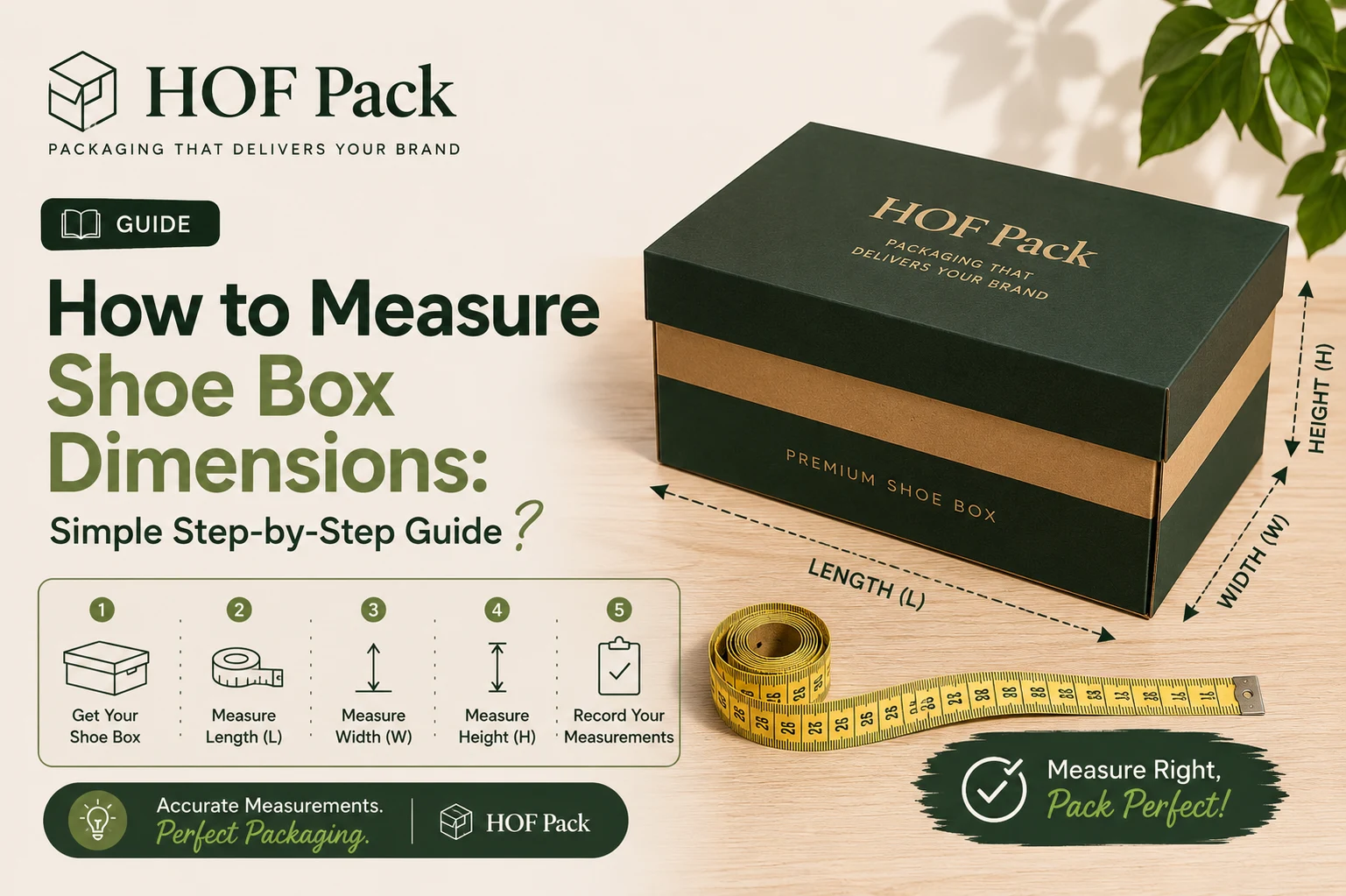
1. Introduction Whether you’re shipping shoes, organizing inventory, or ordering custom packaging, knowing the correct shoe box dimensions can save you time and money. Many people assume they can simply measure the outside of a shoe box and use those numbers. Unfortunately, that’s one of the most common mistakes. Measuring incorrectly can lead to damaged products, higher shipping costs, and custom boxes that don’t fit your shoes properly. In this guide, we’ll explain how to measure a shoe box correctly, the difference between internal and external dimensions, standard shoe box sizes, and tips for choosing the right packaging. The golden rule is simple: Always measure shoe boxes using Length × Width × Height (L × W × H), and always use the internal dimensions whenever possible. 2. Why Accurate Shoe Box Dimensions Matter? A few inches may not seem important, but they can have a big impact. If your box is too small, shoes may become compressed or damaged during transit. If it’s too large, shoes can move around inside the package, increasing the risk of creasing and scuffing. For businesses, inaccurate dimensions can also increase shipping costs because carriers often calculate charges based on package size, not just weight. Whether you’re ordering custom shoe boxes or preparing products for shipping, accurate measurements help avoid unnecessary expenses. 3. What Tools Do You Need? The good news is that measuring a shoe box is easy. You’ll only need: A ruler or measuring tape A pen or pencil A piece of paper or your phone to record measurements For the most accurate results, measure in both inches and centimeters if you regularly work with international suppliers. 4. How to Measure a Shoe Box: Step-by-Step Before you begin, remove the lid and measure the inside of the box. It is important to measure the custom shoe box from inside because outside measurements include the thickness of the cardboard and the lid overlay.  Here is a step-by-step guide to measure the shoe box dimensions from the inside.  Step 1: Find the Length (The Longest Side) Look at the open box from the top. Measure the longest side from the inside wall on the left to the inside wall on the right. Step 2: Find the Width (The Shorter Side) Turn the box or your ruler 90 degrees. Measure the shorter side across the bottom, going from front to back. Step 3: Find the Depth or Height (How Tall It Is) Measure from the inside bottom of the box straight up to the top rim. Do not include the lid in this measurement! 5. Why Internal Dimensions Matter More Than External Dimensions? This is where many people make mistakes. External measurements include: Cardboard thickness Lid overlap Folding edges Internal dimensions represent the actual usable space inside the box. For example, a shoe box may measure: External Size: 14.5 × 10.5 × 5.5 inches Internal Size: 14 × 10 × 5 inches If you order custom packaging using external dimensions, your shoes may not fit properly. That’s why packaging manufacturers almost always work with internal measurements. 6. Standard Shoe Box Sizes Shoebox dimensions vary depending on the type of footwear. Here’s a quick reference guide: Footwear Type Length Width Height Men’s Sneakers & Dress Shoes 14 in (35.5 cm) 10 in (25.4 cm) 5 in (12.7 cm) Women’s Shoes & Sneakers 12 in (30.5 cm) 7 in (17.8 cm) 4 in (10.2 cm) High Heels & Wedges 12 in (30.5 cm) 7.5 in (19 cm) 6 in (15.2 cm) Ankle Boots & Winter Boots 14 in (35.5 cm) 12 in (30.5 cm) 6 in (15.2 cm) Children’s Shoes 9 in (22.8 cm) 6 in (15.2 cm) 3 in (7.6 cm) Keep in mind that brands may use slightly different dimensions depending on the shoe style. For example, Nike shoe box sizes and Adidas shoe box dimensions can vary across product lines. 7. How Much Extra Space Should You Leave? A common mistake is ordering a box that matches the shoe size exactly. Shoes need a little breathing room as well. At HOF Pack, we recommend adding approximately 0.5 inch (1 cm) of extra space. This extra room allows space for: Tissue paper Product inserts Protective wrapping Easier product placement Improves the customer unboxing experience. 8. Shoe Box Dimensions for Shipping When shipping shoes, packaging size directly affects shipping costs. You will probably hear most carriers say something called Dimensional Weight (DIM Weight). This means they calculate shipping charges using package volume, not just package weight. A box that’s unnecessarily large may cost more to ship even if it’s lightweight. For this reason, it’s important to choose a box that’s large enough to protect the shoes but not so large that you’re paying to ship empty space. 9. Avoid These Common Measurement Mistakes In Case of Shoe Boxes: Here are a few mistakes people frequently make that you should definitely avoid. Make a checklist, take a screenshot, or bookmark this blog to avoid these common mistakes every time you are measuring the dimensions of your shoe box. For instance: Measuring the outside instead of the inside Including the lid in height measurements Recording dimensions in the wrong order Forgetting to allow space for inserts and tissue paper Using estimated measurements instead of exact numbers 10. Final Thoughts Measuring shoe box dimensions is simple once you know the correct method. Remember: Measure the inside of the box Follow Length × Width × Height order Leave about 0.5 inch of extra space Consider shipping costs when selecting box sizes Whether you’re storing shoes, shipping products, or ordering custom packaging, accurate measurements help prevent costly mistakes and ensure a better customer experience. If you’re looking for custom shoe boxes designed around your exact dimensions, contact the HOF Pack team for a free consultation, custom dieline, or structural packaging recommendation. HOF Pack is a US-based packaging company that specializes in custom packaging boxes and custom bags to elevate a brand’s image.

Jun 18, 20266 min
The Complete Guide to Custom Food Packaging: Boxes, Pouches, Bags & Labels
Packaging

The Complete Guide to Custom Food Packaging: Boxes, Pouches, Bags & Labels

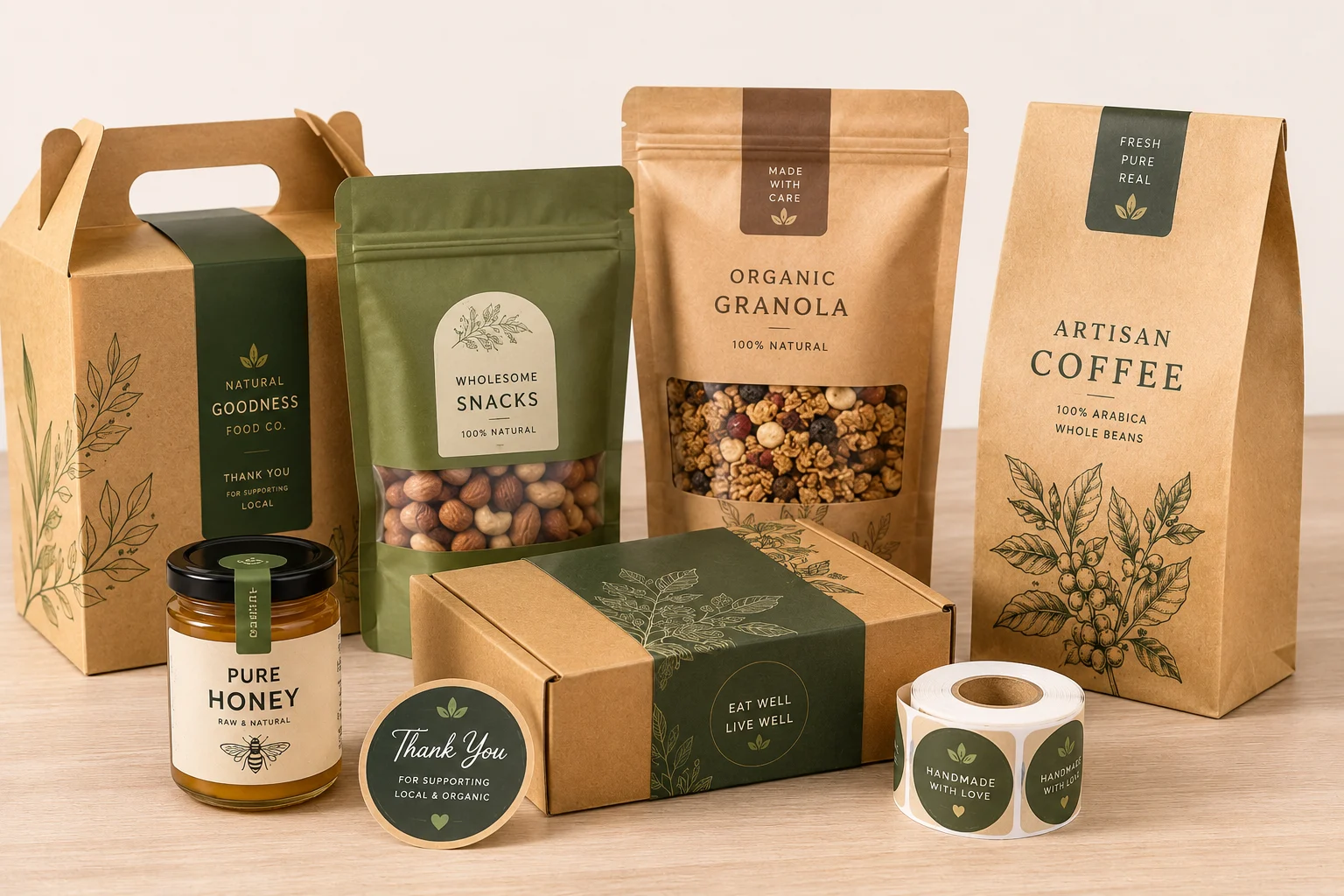
In this guide, we’ll break down different types of custom food packaging for you, so that you can choose the style that suits your product best and help it stand out from the crowd.

Jun 10, 202612 min
Custom Mailers, Poly Mailers & Bubble Mailers: What’s Right for Your Brand?
Packaging

Custom Mailers, Poly Mailers & Bubble Mailers: What’s Right for Your Brand?

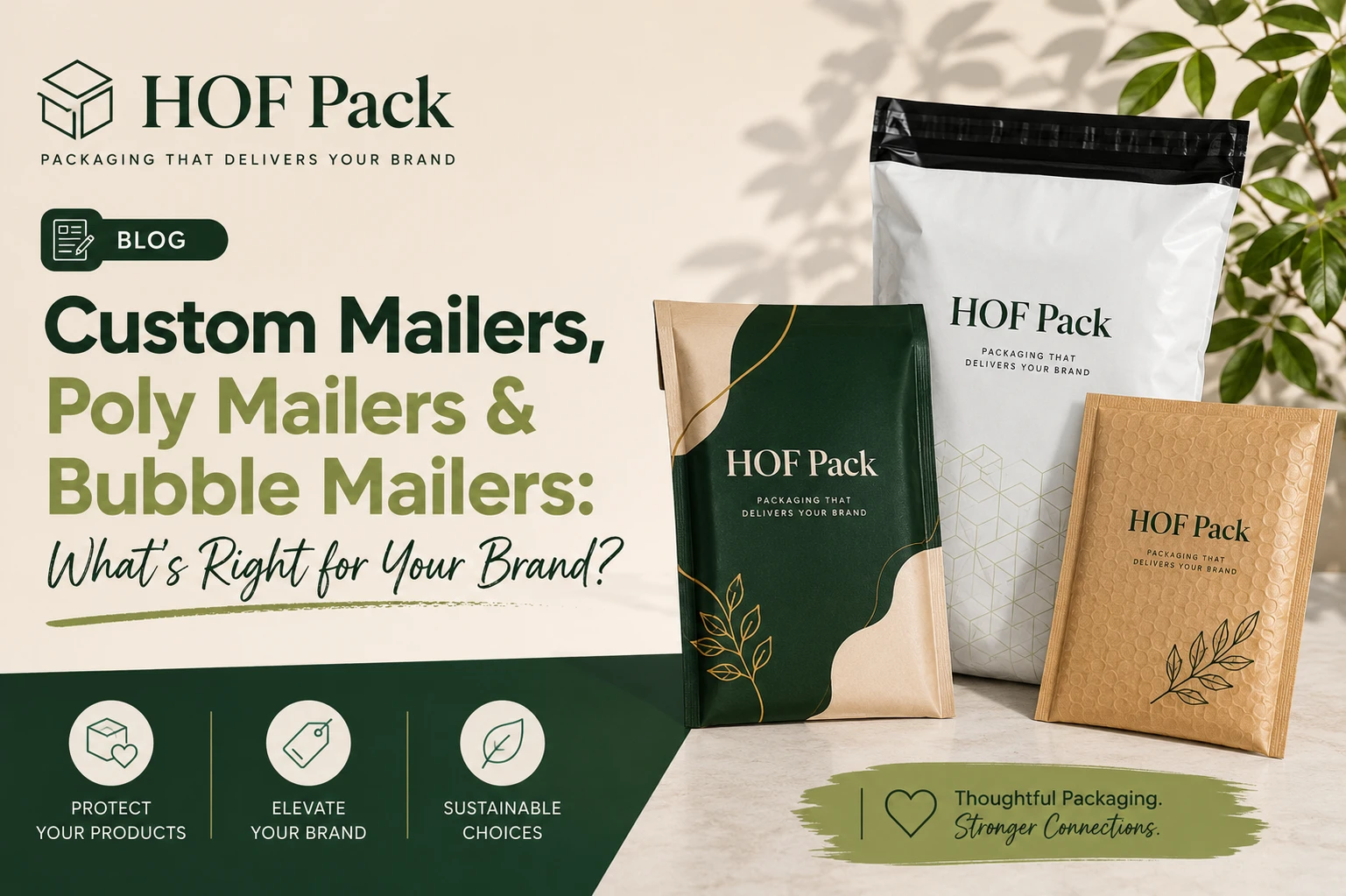
If you run an e-commerce business in the USA, you must know that packaging is much more than a simple box or bag. It serves as a silent salesperson. You like it or not, but your brand’s sales depend on it. Before customers even touch your product, they interact with your mailer. So, that first impression matters. A damaged package creates frustration. Cheap-looking packaging weakens brand trust. But well-designed custom printed mailers can instantly make your business feel more professional, organized, and memorable. But here’s the catch. There are too many options: poly mailers, bubble mailers, kraft paper mailers, corrugated mailers, padded envelopes, and whatnot. It can be overwhelming to choose the right packaging. Because every product has separate needs. You can’t just choose wrapping material based on its looks. Functionality and convenience also matter.  So, in this guide, we’ll break down for you a detailed comparative analysis of poly mailers vs bubble mailers vs paper mailers, best use cases for each, printing options, sustainability trade-offs, sizing recommendations, and how to choose the right custom mailer for your products.   2. Why Mailer Packaging Matters More Than Ever in 2026 Did you know the e-commerce mailer packaging market size was valued at USD 61.54 billion and is projected to skyrocket to USD 162.43 billion by 2034? The rise of e-commerce completely changed packaging expectations. Since the outbreak of COVID-19, the e-commerce business has seen a massive boost and the creator economy is rising. According to research, the creator economy industry is projected to exceed $250 billion globally.  That is why customers now expect: Fast shipping Secure packaging Easy opening experience Visually appealing branding Sustainable packaging option For that reason, custom mailers, poly mailers, and bubble mailers are fundamentally altering fulfillment due to their lightweight, cost-effective, and D2C branding potential.  And here’s the interesting part: Many customers judge product quality before even opening the package. That means your mailer isn’t just shipping material anymore. It’s part of your branding strategy. Especially for: Clothing brands Subscription boxes Cosmetics Small accessories Handmade products CBD brands Let's first understand what custom mailers are, and then you can decide which one suits your brand best.  3. What Are Custom Printed Mailers? Custom printed mailers are lightweight shipping packages designed with branded graphics, logos, colors, or messaging. They are used both as boxes and as flexible packaging solutions. Unlike plain shipping envelopes, custom mailers help businesses create stronger brand recognition, improve customer experience, protect products during transit through their sturdy structure, and make packaging look more professional.  There are different mailer types, each one serving a different purpose: Poly mailers Bubble mailers Kraft paper mailers Corrugated mailers Poly Mailers: Lightweight & Budget-Friendly Poly mailers are flexible plastic shipping bags commonly used by e-commerce businesses. They are one of the most popular packaging choices for shipping soft, lightweight products. They are made of polyethylene, a lightweight, flexible packaging option. These mailers are water-resistant, moisture-resistant, offer flexible storage, and have affordable wholesale pricing due to their minimal weight. They are best for the following brands: Apparel T-shirts Activewear Small fashion accessories Soft textiles Interesting fact:  Many fast-growing DTC fashion brands in the USA rely heavily on custom poly mailers because they reduce shipping weight significantly. Bubble Mailers: Added Cushion Protection Bubble mailers have an inner bubble lining designed to protect products during shipping. They’re ideal for fragile or semi-delicate items that need extra cushioning. Delicate products need extra protection. So, if you’re looking for better shock absorption, reduced product damage, a lightweight packaging solution, and good presentation for your products, bubble wrap or bubble mailers are an excellent choice.  They are best for: Cosmetics Small electronic items Jewelry items Candles Skincare products Small accessories Pro Tip: If your product can crack, leak, scratch, or dent easily, padded mailers are usually the safer choice. Paper Mailers: Eco-Friendly & Premium Looking Paper mailers, on the other hand, are becoming increasingly popular because customers are actively searching for sustainable packaging options. In the past few years, every industry has been shifting towards sustainable packaging, including Kraft paper, recycled cardboard, paperboard, bux board, and seaweed packaging.    These recyclable materials, especially kraft paper mailers, create a clean, minimalist look with a premium natural appearance. They help brands build strong branding aesthetics and plastic-free packaging. However, paper mailers may not offer the same water resistance as poly mailers. (That is honestly one of the biggest trade-offs brands need to consider.)  Still, these mailers are ideal for: Sustainable brands Organic products Luxury apparel Eco-conscious businesses Handmade goods Pro Tip: If you want both an eco-friendly look and water or moisture resistance, you can explore Kraft Mylar bags . They are the perfect blend of aluminum foil lining combined with kraft paper for a blend of sustainability and functionality.  5. Poly Mailers vs Bubble Mailers vs Paper Mailers Let’s simplify it. Mailer Type Best For Main Advantage Limitation Poly Mailers Apparel & textiles Lightweight & affordable Limited protection Bubble Mailers Fragile small products Extra cushioning Slightly higher shipping cost Paper Mailers Sustainable brands Eco-friendly appearance Less water or moisture resistance The “best” option depends entirely on: Product type Shipping distance Branding goals Customer expectations 6. Choosing the Right Mailer for Your Industry Once you know what your product needs and what your customers’ demands are, choosing the right mailer for you gets easier.  Different industries usually prefer different mailer styles. Apparel Brands Most apparel brands prefer custom poly mailers because: Clothing is lightweight Products don’t require rigid protection Shipping costs stay lower Cosmetic & Skincare Brands They require bubble mailers for added protection, commonly used for: Glass containers Small jars Makeup products Fragile cosmetic items Handmade & Sustainable Brands For handmade and organic brands, Kraft paper mailers work very well because they align with eco-conscious branding. They offer the ideal earthly and handmade artisan look, which enhances the look. They are used by: Bakery items Small cookies Takeaway packaging 7. Sizing Guide: Choosing the Right Mailer Size One of the most overlooked packaging mistakes is choosing oversized mailers. Large packaging increases shipping costs, makes products move and clank with one another during transit, and looks very unprofessional. Here is a general sizing recommendation for you: Product Type Recommended Mailer T-shirts 10” x 13” poly mailer Hoodies 14” x 19” poly mailer Cosmetics Small bubble mailer Jewelry 6” x 9” padded mailer Candles Corrugated or padded mailer Subscription kits Corrugated mailer box Always leave enough space for: Product inserts Tissue paper / Butter paper Branding cards Protective wrapping 8. Customize Your Mailers To Match Your Branding Custom printing transforms ordinary packaging into a branding tool. Popular printing methods include: CMYK Printing: Ideal for colorful graphics and detailed artwork. PMS Color Matching: Used when brands need exact logo colors. Digital Printing: Best for smaller packaging runs and faster production. Flexographic Printing: Often used for large-volume mailer production. You can also add packaging finishes that improve customer experience. Small design details can completely change how premium your packaging feels. Popular finishing options include: Matte finishes Gloss coating Metallic inks Minimalist typography Custom interior printing QR codes Thank-you messaging Pro Tip: Many brands now print inside their mailers too, creating a stronger unboxing experience. You can try that as well.  9. Sustainability Trade-Offs Brands Should Understand This is where many businesses get confused. Eco-friendly packaging sounds great, but every material has some trade-offs. While every style and material has its own benefits, they also come with certain drawbacks. Now it's up to you to choose what works best for you.  Poly Mailers They offer lightweight shipping, which reduces carbon emissions to some extent. Some poly mailers are recyclable, but mainly they are made of plastic-based material, which remains a concern for modern and eco-friendly brands. However, it is still the most common type of packaging for e-commerce brands due to its affordability, high-quality printable surface, and functionality. Paper Mailers Paper mailers, since made from 100% recycled and recyclable paper materials, are way easier to recycle. They are much better for eco-conscious branding. They can be made from lightweight kraft paper, paperboard, or even cardboard (slightly heavier). Higher weight may increase shipping costs. Bubble Mailers These mailers provide excellent protection due to the added cushioning provided by air-filled bubbles. They are best for fast production and delivery solutions. However, their mixed polyethylene material structure may complicate recycling.  Hence, it is clear so far. There’s no “perfect” solution. The only perfect type of packaging is what suits your brand (and your product) best. The best packaging balances: Product protection Customer expectations Sustainability goals Shipping costs 10. Final Thoughts Therefore, choosing the right mailer isn’t just about shipping products anymore. It’s about the whole buying experience of customers. So, it must be worth their dollars (otherwise, you might have to deal with their frustration and negative reviews). Custom packaging is about protecting products, building brand identity, improving customer experience, reducing shipping costs, and supporting sustainability goals, especially in 2026. Whether you choose poly mailers, bubble mailers, or kraft paper mailers, the ideal packaging solution depends on your product, audience, and brand positioning. Because today, even a shipping package can become part of your marketing.  HOF Pack is a US-based packaging manufacturing company, providing custom packaging solutions to e-commerce and DTC brands all across the United States. We provide custom boxes, flexible packaging solutions, custom bags, poly mailers, stickers, and labels. We offer wholesale shipping solutions with low MOQs and worldwide shipping. 
Jun 9, 202612 min
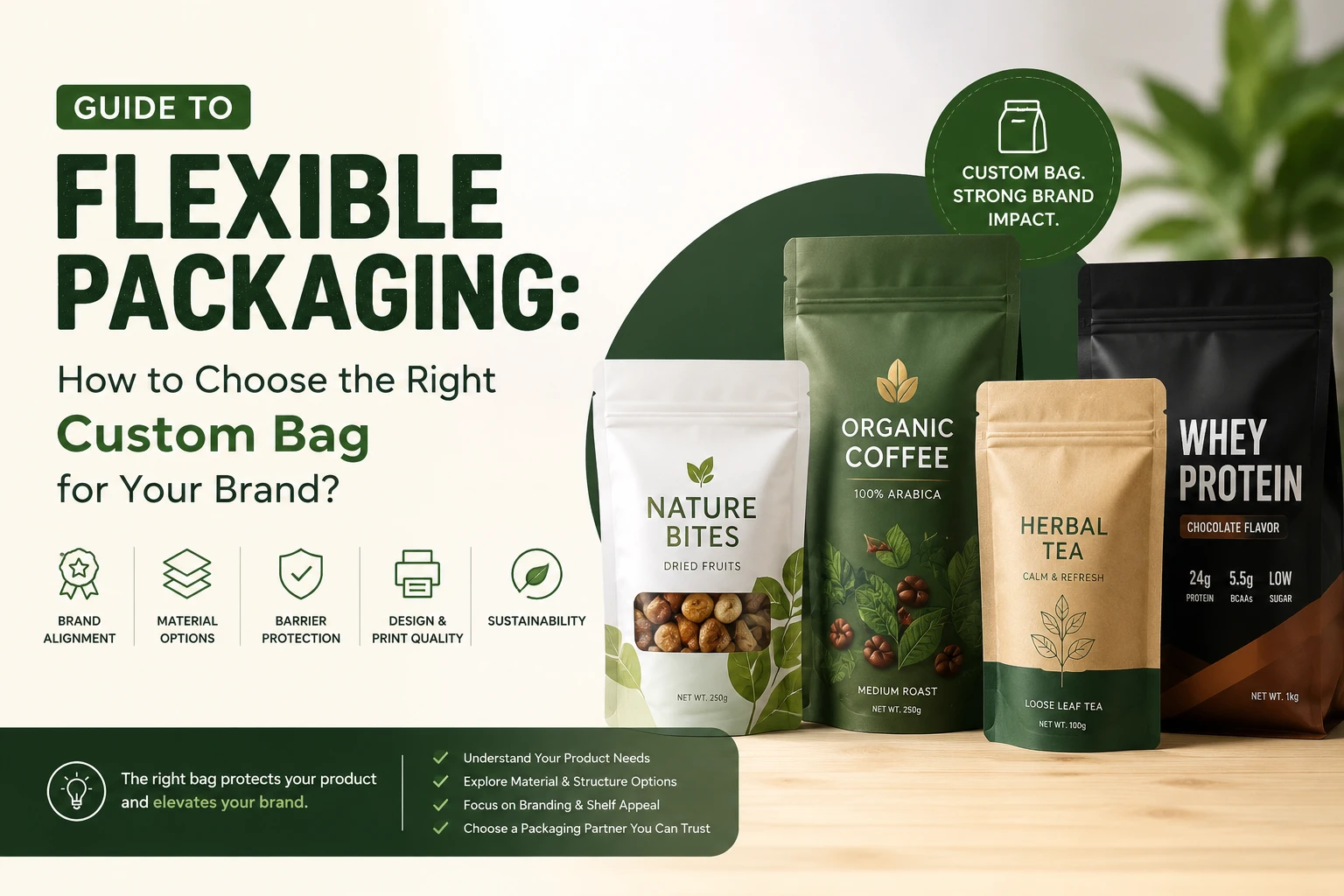
Guide to Flexible Packaging: How to Choose the Right Custom Bag for Your Brand?
Packaging

Guide to Flexible Packaging: How to Choose the Right Custom Bag for Your Brand?

Choose the right custom stand up pouch or packaging bag for your brand with an ultimate guide to all flexible packaging types.

Jun 1, 202613 min
Types of Custom Boxes | A Go-To Guide for Every Brand Owner
Packaging

Types of Custom Boxes | A Go-To Guide for Every Brand Owner

Learn everything about custom boxes in the USA, including mailer boxes, shipping boxes, folding cartons, rigid boxes, display packaging, and printing options.

May 18, 202612 min
Secondary Packaging Explained: Types, Materials & Branding Guide
Packaging

Secondary Packaging Explained: Types, Materials & Branding Guide

Learn everything about custom secondary packaging, including packaging types, materials, printing methods, sustainability, costs, and how businesses choose the right packaging solutions.

May 11, 202617 min

Let's build something great together.

Get your custom packaging quote today — free design support included.