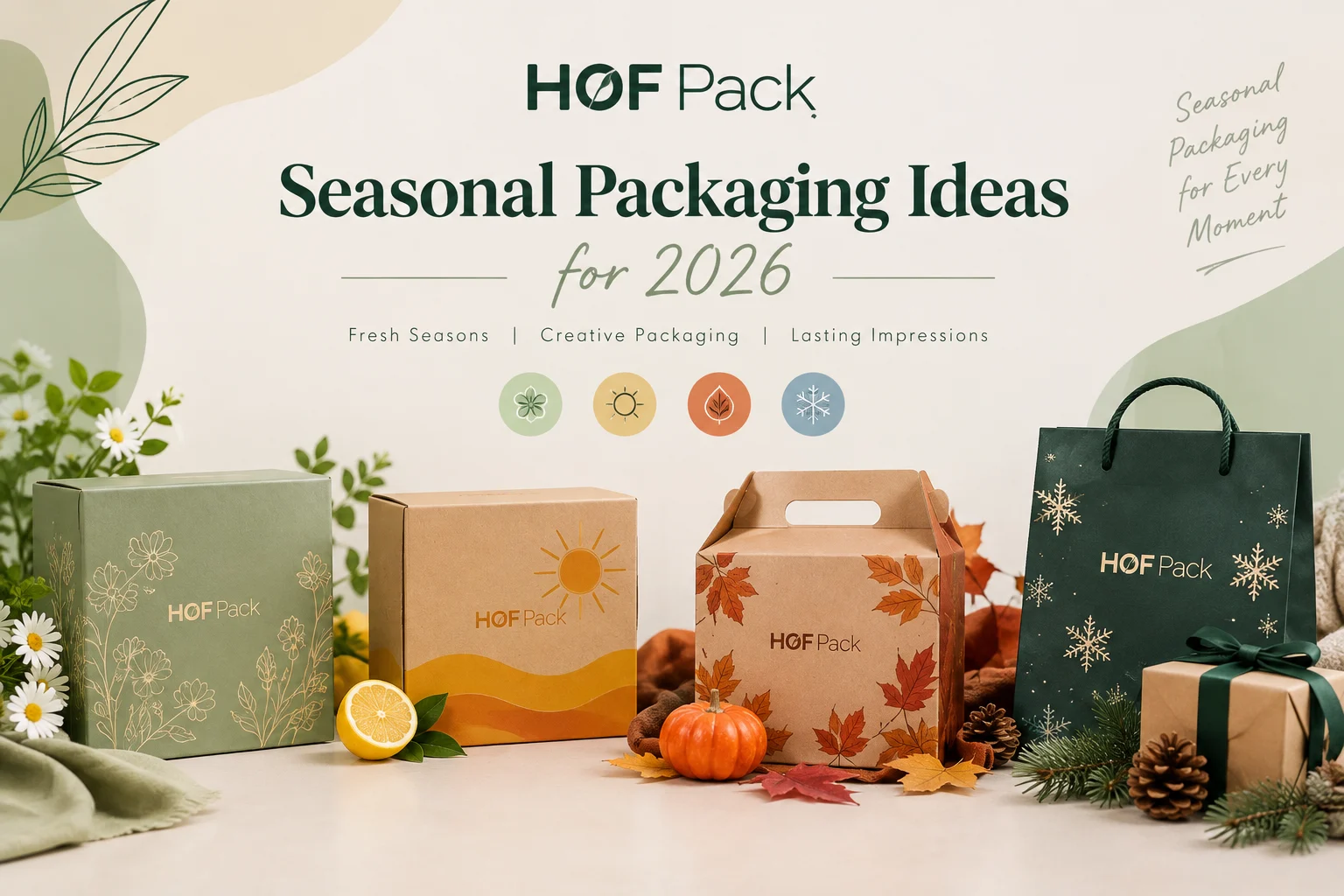
Packaging that is dedicated to a specific season holds more worth than the usual packaging that we see on our daily basis. Something extraordinary in shape, color, or design instantly catches the attention of the consumer.
In November 2025, a $29.95 glass cup shaped like a bear sold out at most Starbucks stores within hours of its release. People queued overnight, and some cups were resold online for up to $350. Starbucks said the demand exceeded "even our biggest expectations."
That is the power of seasonal packaging, and it is just a single example. The product inside barely changes, but its packaging becomes the talk of the town.
This seasonal packaging guide gives you practical seasonal packaging ideas for the biggest holidays of the year, five ways to go seasonal at any budget, the trends shaping 2026 that also remain timeless, and a month-by-month calendar so your boxes arrive before the season does.
What Makes Seasonal Packaging Work
Seasonal packaging, also known as seasonal gift packaging or seasonal product packaging, is something that you can’t find on the shelf all year round. It is custom-made for a specific holiday or time of the year. That can mean a full redesign, a limited edition box, a festive sticker, or simply any extra freebies you add in your gift packaging boxes. This type of packaging makes the consumer anticipate the upcoming season and works for majorly three reasons.
People are already in a buying mood.
Holidays come with a reason to spend. In the US alone, shoppers were expected to spend a record $29.1 billion on Valentine's Day and a record $24.9 billion on Easter in 2026.
Holiday sales in November and December 2025 passed $1 trillion for the first time. Seasonal packaging puts your product in that highlight. Even though the product itself might not be special, if its packaging is attention-grabbing, it will be sold out at your decided price.
"Limited" makes people curious and act.
In a 2024 YouGov survey across 17 markets, 38% of consumers said they are more likely to buy food or grocery items marketed as limited edition.
In the UAE and Indonesia, that figure rose to 67%. A box that won't be around next month creates a reason to buy now.
A good box becomes part of the gift.
During the holiday season, a lot of products you sell are bought for someone else. So, the packaging will be the first thing that a recipient sees and often something that they will share in their circle.
When it is good enough to keep, it makes your brand stay in their home long after even the product is gone.
Seasonal Packaging Ideas by Holiday
To make your products gift-worthy, all you have to do is connect to custom packaging manufacturers who will get you started in the right direction.
A plain box that has some seasonal elements on it can instantly make all the difference. Here are seasonal packaging tips and ideas that you can adopt for whatever you sell.
Valentine's Day (February)
Valentine’s packaging has been one of the most popular examples of seasonal packaging. The trend of heart-shaped boxes is still going strong because people connect more with unique shapes.
It started when Richard Cadbury put his chocolates in a heart-shaped box in 1861, and it became an instant hit. The lesson or idea was not selling chocolates, but the shape of the box that people fell for.
Two of the Valentine's Day elements came together and became a hit: the chocolates and a uniquely shaped packaging box.
-
Make it a keepsake. Boxes people keep, like magnetic closure boxes with a soft-touch finish, end up holding letters and jewelry for years.
-
Go beyond red and pink. Deep burgundy, blush with gold foil, or black with a single red detail all read as romantic without looking like every other shelf.
-
Leave room for a message. A printed "To / From" panel or a blank card slot turns a product into a personal gift.
-
Design for multisets. Pair products in a box with compartments for two, four, or more items to make it a great gift for couples.
Easter (March or April)
Easter shoppers are usually the ones who are looking for something for children, family, or home decor, so playful packaging works better than premium here. Candy alone has been sold for $3.5 billion of US Easter spending.
-
Use spring colors, like pastel pinks, blues, yellows, or greens. You can also add egg-shaped window die cuts on a tuck box to show the product inside.
-
Change the shape from a regular rectangle box to something more unusual, like a pillow box with bunny ear tops.
-
Make the box a part of the hunt for eggs with a small clue printed inside, or a fold-out that becomes a mini basket that gives kids something to do with it.
Halloween (October)
Americans plan to spend $13.5 billion on Halloween in 2026, including $4.1 billion on candy. This is the one holiday where brands can be strange, funny, or a little spooky.
-
Black, orange, and purple colors are usually the base for Halloween packaging boxes. You can also add neon green, glow-in-the-dark inks, or a matte black box with one glossy spot detail.
-
For trick-or-treaters, custom-printed gable boxes with spooky designs and cute characters are the way to go.
-
Interiors can include a peek-a-boo window or a surprise message or a monster face reward as soon as someone opens it.
-
A spooky version of your logo or a specific character that represents your brand is more memorable than generic pumpkins and bats.
Thanksgiving (November)
Thanksgiving packaging is more showcased at the point of sale or at the dinner tables rather than hidden as a treasure hunt gift or placed under a tree.
-
Use warm, earthy tones like rust, mustard, and deep green to fit in the season and feel natural. The best way to make it happen is using kraft boxes with twine threads. Nothing is out of the theme. From the main gift box to its details.
-
Go for customized food boxes for this season's special treats that are the main essence. Such as pies, turkey, cranberry sauce, or pumpkin spice mix.
-
Add a gratitude touch by including custom gift cards with a personalized message or the recipient's name embossed or foil stamped on them.
Christmas and the Holiday Season (late November to December)
This is the biggest packaging season of the year, and it starts earlier than most brands think. Black Friday and Cyber Monday kick it off in late November, so your holiday packaging needs to be ready by then.
-
Printed Christmas boxes that look already gift-ready save customers time and make your brand part of the holiday spirit.
-
Don't stop your gifting experience for a single day. You can turn one purchase into 24 days of surprises and keepsakes with advent calendar boxes. These boxes are one of the strongest seasonal formats because the customers open your brand every day for weeks.
-
Holiday orders gave you multiple options to be creative at its fullest. However, if you think boxes are too mainstream, you can also compare custom mailers vs. poly mailers to find an alternative.
-
Use classic colors in a fresh way. Red and green are obvious, but you can also go with gold accents, navy, silver, forest green, cream, or white with metallic foils to revise the festive packaging that feels and looks unique this season.
-
Think about the tree, the table, and the stockings. Gift sets, party favors, Christmas ribbons, and small cutesy boxes each serve a different purpose.
New Year's Eve (December 31)
New Year's packaging is all about celebrating fresh starts and new beginnings. So its design should reflect the same.
-
Go metallic, black, gold, silver, and champagne tones with foil and glitter effect inks that match the party’s atmosphere.
-
Add number details like countdown boxes or a midnight clock face to make the box a part of the party.
-
Use celebration kits, gift sets, and New Year's New Routine bundles that suit this time of the year.
Five Budget Levels to Get Best Seasonal Packaging
You don’t need a full redesign or complete rebranding to make your packaging festive look or feel. Most brands pick one of these five levels depending on budget, timeline, and how much the season matters to their business.
Level 1 is the cheapest way to start. Custom labels and stickers can turn plain stock into holiday stock in a day of packing, and they're easy to stop using once the season ends.
Levels 2 change the experience without changing your box, and these are ribbons or custom-printed tissue papers. They're ideal if you hold a lot of standard packaging inventory and don't want it to go to waste.
Level 3 is a midway to do something extra on your existing boxes. Custom belly bands and sleeves can be wrapped around and are easy to remove once the season ends.
Level 4 is where most brands land for Christmas. Seasonal custom mailer boxes give online orders a festive unboxing without new tooling. If you're unsure which structure suits your product, this overview of the main types of custom boxes helps.
Level 5 is for the season that matters most to your year. Collector's tins, advent formats, and premium rigid boxes cost more and take longer, but they are the ones customers keep, display, and post online.
How Seasonal Packaging Design Has Evolved Over the Years
Modern trends of gift wrapping and packaging have changed a lot over the last few years. People are moving towards sustainable options and minimalism.
|
Factors |
Then |
Now |
|
Materials |
Tins, foil, glitter, and plastic wrappers |
Paper, board, kraft, and single-material packs that recycle easily |
|
Design |
Literal holiday icons: Santa, holly, snowflakes |
Themed designs that use seasonal color and texture but still look like the brand |
|
Where it's seen |
On the store shelf |
On the shelf, on the doorstep, and on social media |
|
Lifespan |
Opened and thrown away |
Made to be reused, kept, or collected |
|
Print runs |
Large runs only, planned a year ahead |
Short digital runs that let small brands go seasonal |
|
Interaction |
None |
QR codes, hidden messages, and games built into the unboxing |
A clear example of the shift: Quality Street used colorful plastic wrappers for 86 years, then switched to recyclable paper in 2022, removing about two billion plastic wrappers a year while keeping the bright colors fans expect.
Seasonal Packaging Trends 2026
Here we have listed the top 6 seasonal packaging trends for 2026 that are predicted to stay timeless. From renowned brands to small businesses, each of them is switching to these to stay in the game and keep their customers coming back for more.
-
Less packaging, lesser waste
Governments are starting to push brands toward less packaging. In the EU, a new law that took effect in August 2026 means that from 2030, online orders can't be shipped in boxes that are more than half empty.
In the US, seven states now make brands help pay for recycling the packaging they sell, so the more packaging you use, the more it can cost you.
How to use it: Right-sized packaging to the product looks more premium, ships cheaper, and keeps you ahead of the rules. The fillers are used only where necessary, like for delicate or fragile items.
-
Paper usage and end of mixed materials
Mintel's 2026 packaging prediction calls this "the end of the recycling myth": consumers increasingly know that "recyclable" doesn't always mean recycled, and they use mixed materials in their packaging.
It means when you go for recycling them, they end up in the landfill because they claim to be biodegradable but are neither biodegradable nor recyclable.
How to use it: The simplest sustainable packaging is packaging that's easy to recycle as a whole. Uncoated kraft boxes with festive printing suit autumn and winter well, and skip plastic windows and glitter that can't be separated.
-
Bold color vs. calm white
Two color styles are popular in 2026. The first is often called "dopamine colors": bright, high-energy shades like hot pink, bright orange, sunny yellow, electric blue, and lime green that grab attention and put people in a good mood. The second is soft, calm white, which Pantone picked as its 2026 Color of the Year, called Cloud Dancer.
How to use it: Pick the mood that fits your brand. Playful brands can push bright Halloween and Easter palettes. Premium brands can use white and cream with one metallic accent for the holidays.
-
Unboxing as a game
Gamified unboxing is another trend: packaging with layers, hidden messages, and things to discover. People also incorporate them as treasure hunts in their marketing campaigns and put a freebie at the end.
How to use it: Add a printed message under the lid, a numbered series of compartments, or a small surprise in the last layer. Advent formats are the classic version of this.
-
Packs that build a display
Picture a row of boxes on a shelf that join up to make one big image, like pieces of a puzzle. That's the idea here: packs designed to look good alone and, even better, side by side, on a store shelf or in a customer's photo.
How to use it: Design a seasonal range where each box shows part of a scene. Customers who buy one are tempted to collect the set and complete the big picture.
-
Limited drops that create a rush
Remember the bear-shaped Starbucks cup from the start of this guide? It sold out in hours for two simple reasons: there weren't many of them, and everyone wanted to post one online.
When people think something might run out, they don't wait to buy it. And when it looks good in a photo, your customers spread the word for you.
How to use it: Number your limited editions, announce the release date in advance, and keep the run small enough that it really does run out. The more you create rush, the more people will be curious to buy it before it's too late.
Brands That Got It Right and Wrong
Not all holiday packaging ideas have gone right; some have been a huge disaster or a mess. Here are some good and bad examples from which you can learn this season and win.
Got it right
Starbucks holiday cups. Starbucks introduced holiday cups in 1997, and they have been mostly red since 1999. The yearly reveal has gained popularity and become a media event. The lesson: repeat a seasonal tradition until customers start waiting for it.
KitKat in Japan. Nestlé has released more than 400 limited flavors there since 2000. In 2009 it made packs with space for a message and a stamp so students could post them as good-luck gifts before exams. They sold out within a month and won a Cannes Lions award. The lesson: tie your packaging to a local ritual, not just a date.
Cadbury's heart box. Over 160 years after Richard Cadbury’s first heart-shaped box for chocolates, the format is still being used as the official default packaging for Valentine’s Day. The lesson: a strong shape integrated with perfect strategy can bypass any print trend and stay relevant forever.
Got it wrong
Coca-Cola's white cans (2011). For the holidays, Coca-Cola swapped its famous red cans for white ones with polar bears to raise money for polar bear conservation.
The problem? Diet Coke already came in silver cans, and shoppers kept grabbing the wrong drink. Within about a month, Coca-Cola went back to red. The lesson: change the look for the season, but never hide the colors or signs customers use to find you on the shelf.
Starbucks' plain red cup (2015). One year, Starbucks dropped the usual holiday artwork and used a plain red cup instead. Many customers were upset online, saying it no longer felt like the holidays. The lesson: once customers expect a seasonal design from you, removing it gets noticed too.
Reese's Christmas trees (2015). The pack showed a neat little Christmas tree, but the chocolate inside looked more like a blob. Fans made fun of them online, and Hershey had to apologize. The lesson: if your packaging shows the product, make sure the real thing looks the same.
When to Order: A Month-by-Month Calendar for Understanding
Seasonal packaging takes longer than most brands expect. From first idea to boxes in your hands, plan for three to five months. Designing and printing usually take 6–12 weeks, and shipping adds anywhere from one week by air to two months by sea.
So don't count back from the holiday. Count back from the day your product needs to go on sale. The extra days add safety in case of any delays, which are common in the busy holiday season. Packaging arriving early is better than arriving late or after the holiday is over.
|
Holiday |
Start design |
Approve artwork |
Production |
Packaging in hand |
|
Valentine's Day (Feb 14) |
Early October |
Early November |
November–December |
Early January |
|
Easter (March/April) |
November |
December |
January |
Mid-February |
|
Halloween (Oct 31) |
May |
June |
July–August |
Early September |
|
Thanksgiving (late November) |
June |
July |
August–September |
Mid-October |
|
Black Friday and Christmas |
May–June |
July |
August–September |
Mid-October |
|
New Year's Eve (Dec 31) |
July |
August |
September–October |
Mid-November |
A few rules make the calendar work:
-
Shops set up holiday displays weeks early, so packaging for stores should arrive before packaging for online orders.
-
Give yourself extra time. Add two weeks for design changes and two more for shipping delays, because factories and couriers are at their busiest before Christmas.
-
Plan the next season while finishing this one. When your Halloween boxes are being printed, your Christmas design should already be in review. So if it's October now, it's time to start on Valentine's Day.
Mistakes to Avoid
-
Rushed orders cost more, give you fewer choices, and the boxes may arrive after the season has already begun.
-
Seasonal design should change the mood, not your look. If regular customers can't find you on the shelf, you've changed too much.
-
A box that says "Christmas 2026" can't be used in January or next year, so leave the date off unless it really matters.
-
Ordering too much leaves you with seasonal packaging boxes that are hard to use once the holiday is over. Use last season's sales to decide how many you need.
-
Glitter, plastic windows, and shiny foil look festive but often can't be recycled and end up in the trash. Customers notice, and so do the new packaging laws.
-
A box that looks great on a shelf might not survive a busy December courier, so make sure it's strong enough to ship, not just pretty.
-
Extra layers and boxes that are too big cost more and create waste. New rules in places like China and the EU are already pushing brands to cut back.
HOF Pack Team
Custom Packaging Experts at HOF Pack