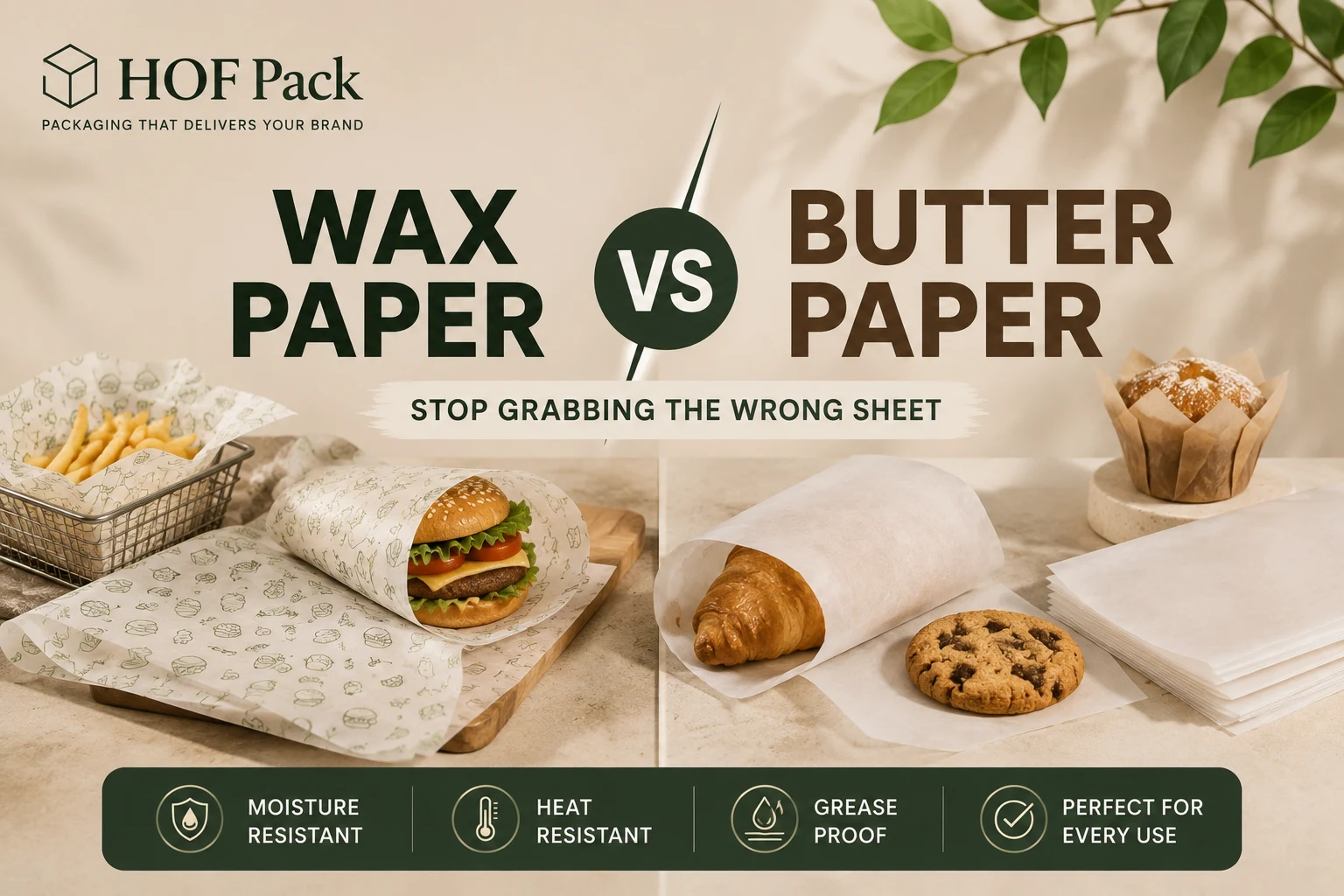
Wax paper is everywhere. It holds around 40% penetration in food service, lining deli counters, wrapping sandwiches, and separating patties in kitchens across the country, and North America alone accounts for roughly 40% of the global wax paper market. Odds are you've handled a sheet this week without a second thought.
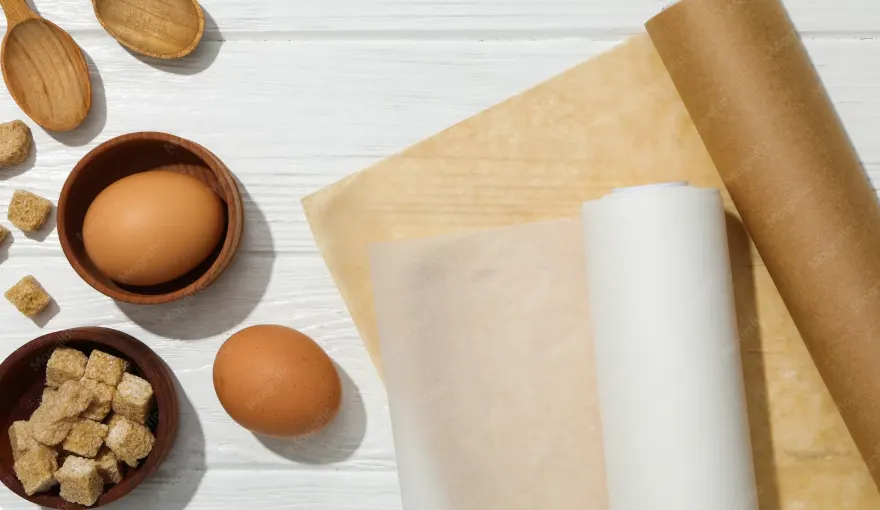 And that's exactly where the trouble starts. Picture your cake batter-ready, the oven hot, and you grab a sheet off the roll on autopilot. Twenty minutes later your kitchen smells like melting crayons, smoke is curling from the oven door, and a film of wax has fused to the bottom of your bake. One wrong sheet, one ruined recipe.
Here's the uncomfortable truth: wax paper and butter paper look almost identical side by side, yet they behave in completely opposite ways the moment heat enters the picture. The wax paper vs butter paper mix-up quietly trips up home cooks, bakers, and food businesses every single day, and most people never realize they've been using the wrong one.
What Is a Butter Paper?
Let's start with the basics. Many people do not know what a butter paper is. Well, it's a greaseproof, semi-translucent sheet made from processed cellulose fibers. This paper is used to wrap butter, cheese, and other fatty foods without soaking through or leaving oily stains. Over time, its name stuck to a whole category of kitchen paper.
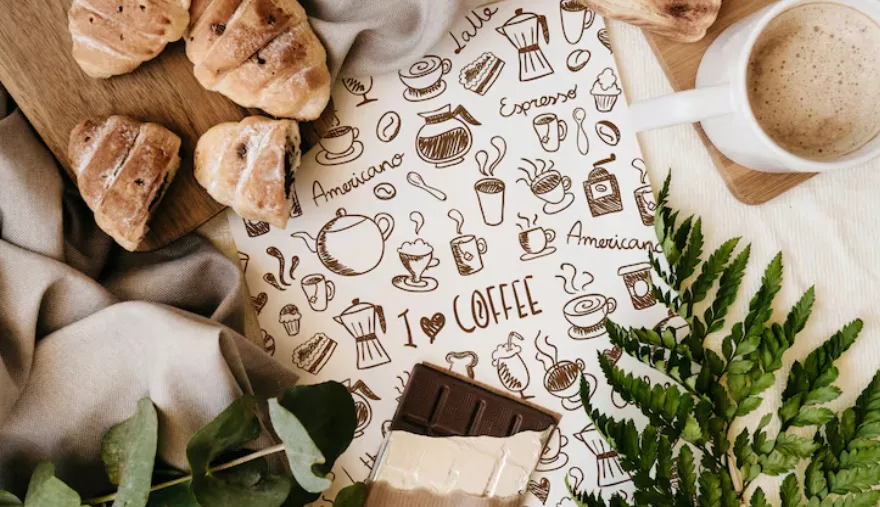
Today, many cooks use "butter paper" as an everyday term for baking paper or parchment paper. Unlike wax paper, it isn't coated in a meltable wax layer, so it resists grease and moisture, releases baked goods cleanly, and tolerates oven heat far better. Premium versions carry a food-safe silicone coating for extra non-stick performance.
That heat resistance is exactly what makes the wax paper vs butter paper distinction matter in a real kitchen.
Is Wax Paper and Butter Paper Same?
People constantly ask, is wax paper and butter paper the same? The answer is no. They differ in almost every way that matters once you look past the roll:
-
Coating: Wax paper has a thin paraffin or soy wax layer on both sides. Butter paper is greaseproof with no meltable wax, often finished with a heat-stable silicone coating instead.
-
Heat tolerance: Wax paper melts, smokes, and can even catch fire near an oven element. Butter paper holds up to typical baking temperatures, usually up to around 420–450°F.
-
Best use: Wax paper is built for cold jobs, wrapping sandwiches, separating patties, lining counters. Butter paper is made for the oven, lining trays, and baking.
-
Food contact: Wax paper can transfer wax onto hot food. Butter paper releases food cleanly without residue.
-
Feel and look: Wax paper has a slight waxy sheen and slick surface. Butter paper is more matte, crisp, and semi-translucent.
-
Durability: Butter paper tends to be sturdier under heat and moisture, while wax paper can tear or soften faster on greasy, warm foods.
When it comes to wax paper vs butter paper, the real dividing line is simple: does it go anywhere near heat? Cold storage, reach for wax paper. Anything baked, reach for butter paper.
Parchment Paper Is Butter Paper... Sort Of
Many people think that parchment and butter paper are the same. Many US kitchens, South Asian and British cooking professionals believe that parchment paper is just another name of butter paper. Both papers are greaseproof and oven-friendly. Therefore, the two terms get used interchangeably.
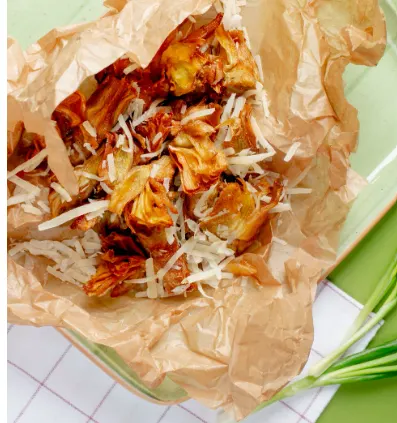
The subtle difference between butter paper and parchment paper comes down to the coating. True parchment is silicone-coated for maximum non-stick performance and higher heat tolerance, usually rated to around 420–450°F.
Some sheets sold as butter paper are greaseproof but not silicone-coated, making them slightly less slick and rated for lower temperatures. For everyday wrapping and tray lining, they are effectively interchangeable. For high-heat baking, silicone-coated parchment has the edge. Either way, both sit on the same side of the wax paper vs butter paper divide: bake-ready.
Are Parchment Paper and Wax Paper the Same?
This is the question that saves ruined bakes. Are parchment paper and wax paper the same? Absolutely not. Parchment is heat-safe and belongs in the oven; wax paper is not and does not. Swap them and the wax melts, smokes, and in some cases can catch fire against a hot element or flame.
So if parchment sits with butter paper on the bake-safe side, wax paper stays firmly in the cold-storage lane. That single fact resolves most of the confusion behind the wax paper vs butter paper debate: one is built for heat, the other only for cold.
Quick Guide: When to Use Each
Use wax paper for:
-
Wrapping cold sandwiches, cheese, and grab-and-go items
-
Separating burger patties, cookie dough, or candy layers
-
Lining countertops for mess-free food prep
-
Brief microwave covering (never the oven)
Use butter paper or parchment for:
-
Lining baking sheets and cake pans
-
Rolling out sticky dough
-
Wrapping greasy or oily foods
-
En papillote cooking and any oven task up to its rated temperature
Keep the two rolls in different spots in your kitchen and the wax paper vs butter paper mistake disappears overnight.
Why This Matters for Food Brands and Packaging
For cafés, bakeries, delis, and food brands, choosing the wrong paper is not just a kitchen slip. It affects food safety, presentation, and cost. Greaseproof butter paper and parchment keep branded wraps looking clean and professional, even under warm, oily foods. Wax paper is perfect for cold, quick-service items where a light, moisture-resistant wrap is all you need.
Getting the wax paper vs butter paper choice right means your packaging matches your menu, your heat, and the experience your customer has when they unwrap their order. The wrong sheet shows up as grease stains, torn wraps, or a soggy first impression, and customers notice.
Stay tuned for more with HoF Blogs.
HOF Pack Team
Custom Packaging Experts at HOF Pack